Minnesota Economic Blackout Ignites National Solidarity Movement Against ICE
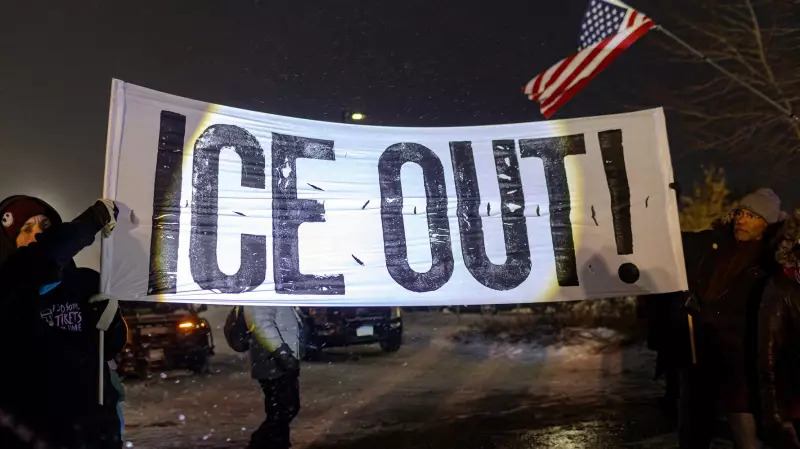
On January 23rd, a significant number of Minnesotans will abstain from work, school, and shopping as part of a statewide economic blackout. This coordinated action protests the aggressive deportation campaign led by U.S. Immigration and Customs Enforcement (ICE) within their state. The movement, however, extends far beyond Minnesota's borders, inspiring solidarity protests across the United States.
National Solidarity Takes Shape
In Massachusetts, Jim Badger-Aguilar, a public employee and chapter president for the Massachusetts Commission for the Blind, plans to protest in solidarity with the Minnesota demonstrators. "We're rallying in solidarity with the people in Minnesota, because we don't know who's next," Badger-Aguilar told HuffPost. "It's really all of us that are at risk here." His participation is deeply personal, drawing parallels between current U.S. immigration enforcement tactics and state terror his family experienced in Honduras and Guatemala.
Badger-Aguilar is also a member of the Service Employees International Union (SEIU), which represents nearly 2 million service and health care workers nationwide. The union will have members participating in Friday's actions in more than a dozen U.S. cities, including:

- Los Angeles, California
- Orlando, Florida
- Boston, Massachusetts
- New York City, New York
Clear Goals and Widespread Resonance
The Minnesota protest, officially called "ICE Out of MN: Day of Truth and Freedom," has three explicit objectives:
- Immediate removal of ICE from Minnesota
- Legal accountability for the federal agent who recently killed Minnesota resident Renee Good
- Prevention of additional federal funding to ICE
This clarity of purpose distinguishes the protest from previous economic boycotts. "The protesters are not asking for 'abstract economic changes in a marketplace ... but literally, 'We don't want military force in our neighborhoods,'" explained Americus Reed, a marketing professor at the University of Pennsylvania's Wharton School. This specific target makes the movement resonate with people far beyond Minnesota, transforming it from a local issue into a national concern.
Academic Perspectives on Protest Efficacy
While the protest's goals are clear, experts offer differing views on its potential impact. Professor Reed believes the movement's focused objective increases its chances of success. In contrast, Koen Pauwels, a marketing professor at Northeastern University, doubts the boycott will immediately remove ICE from communities, citing President Trump's consolidated power. However, Pauwels acknowledges that such actions "send a strong message that people are willing to do more than just write letters or comment on social media," potentially influencing post-Trump elections.
Coordinated National Response
The Minnesota blackout has catalyzed a coordinated national response. In New York City, students and teachers plan school walkouts in solidarity. The progressive group Indivisible is organizing demonstrations in multiple states. Organizers have created an online map showing groups hosting national solidarity actions across the country on January 23rd, allowing participants to find local events by entering their city or zip code.
Professor Reed emphasizes the importance of visible, documented participation: "It should be hashtagged, it should be [posted in] a place where all those centralized images can be archived." This digital documentation helps sustain momentum, countering the tendency for economic boycotts to fizzle out due to confusing goals and short-lived actions.
Escalating Tensions and Unforgettable Stories
The protest movement gains urgency from recent, disturbing ICE actions that have seared themselves into public consciousness. This month alone in Minnesota, federal agents have:

- Broken down doors and detained a barely-clothed man without a warrant
- Grabbed a 5-year-old returning home from school and transported him to a facility in Texas
Instead of de-escalating, the Trump administration has threatened to use the Insurrection Act and deploy the military, with more than 1,500 active-duty Army soldiers on standby for potential deployment to Minnesota. "This is a 'Which side are you on?' moment," Badger-Aguilar stated. "There's no fence you can sit on in this situation."
Despite describing the federal government's actions as "terrifying," Badger-Aguilar remains committed to protesting. "If we are silent because it's terrifying, it's like the schoolyard bully: If you back off, it's only going to get worse." This sentiment captures the determination driving a movement that has transformed a Minnesota economic blackout into a national day of action against immigration enforcement practices.