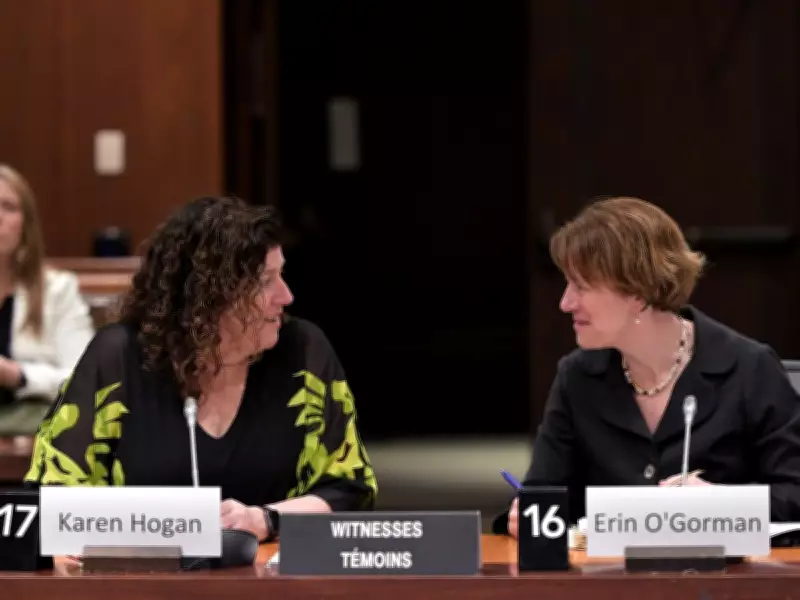
Canadian immigration officials have presented a comprehensive action plan to a House of Commons committee, responding to a damning auditor general's report that exposed significant integrity control failures within the international student visa program. The report, published last month by Auditor General Karen Hogan, revealed alarming gaps in enforcement and compliance mechanisms.
Audit Reveals Widespread Non-Compliance
The auditor general's investigation uncovered that post-secondary institutions flagged approximately 153,000 cases of non-compliance in the international student program between 2023 and 2024. Despite this staggering number, the immigration department only possessed sufficient budget to investigate a mere 4,000 cases, representing less than 3% of the identified concerns.
Deputy Minister of Immigration, Refugees and Citizenship Ted Gallivan acknowledged during his committee testimony that "the number of high risk cases or fraud ought to drive the budget, not the other way around." Gallivan, who assumed his position just four weeks ago on the same day the audit was published, emphasized the need for fundamental changes to the program's oversight structure.

Critical Findings on Visa Enforcement
The report, compiled with assistance from the Canada Border Services Agency, revealed particularly troubling statistics regarding visa enforcement. Only 40% of the 39,500 students required to leave Canada due to lapsed visas in 2024 had actually departed the country. Furthermore, approximately 800 cases involving fraudulent documentation were never investigated by immigration authorities.
"I've asked the team to start pilot work around aggressively managing the end of the visa as a management control," Gallivan told committee members. "We have to make sure that there's a full continuum from telling people the rules to reminding them nicely to reminding them forcefully."
Officials Emphasize Consequences for Overstays
During the committee hearing, officials stressed the serious repercussions facing international students who violate visa conditions. "You know, an overstay has repercussions, including up to a five-year ban from readmittance to the country," Gallivan stated. He described part of the solution as "the threat of no-return visa" to encourage voluntary compliance.
Canada Border Services Agency President Erin O'Gorman, who testified alongside Gallivan, emphasized that while her agency prioritizes "serious admissibility failed claimants," CBSA officers routinely remove individuals who are out of compliance with their immigration status. However, she noted that forced removal represents an expensive enforcement approach.
Focus on Voluntary Compliance
Both officials highlighted the importance of encouraging voluntary compliance rather than relying primarily on forced removals. "It's an expensive prospect to have a CBSA officer find somebody to remove them," O'Gorman explained to committee members. "Most students are genuine, and I think will remove themselves off the basis of the work that's being discussed today."
Gallivan and O'Gorman promised improved communication and coordination between their respective agencies to address the systemic issues identified in the audit. The deputy minister confirmed that information technology work is already underway to strengthen visa management controls.
Leadership Changes and Ongoing Challenges
Gallivan's appointment follows the departure of his predecessor, Dr. Harpreet S. Kochhar, who now serves as president of the Canadian Food Inspection Agency. The new deputy minister acknowledged that he has not yet received a satisfactory explanation for why the 800 cases involving fraudulent documentation were never pursued by the department.
The audit findings come at a critical time for Canada's international education sector, which has experienced significant growth in recent years. Officials emphasized that while the majority of international students comply with visa requirements, the system must be strengthened to address those who "have come for the wrong reasons."

O'Gorman concluded her testimony by noting, "Some have come for the wrong reasons, and they may find themselves in our serious and admissibility category. But every year we do remove individuals who are out of compliance with their immigration status as a matter of course, and so we'll continue to do that."