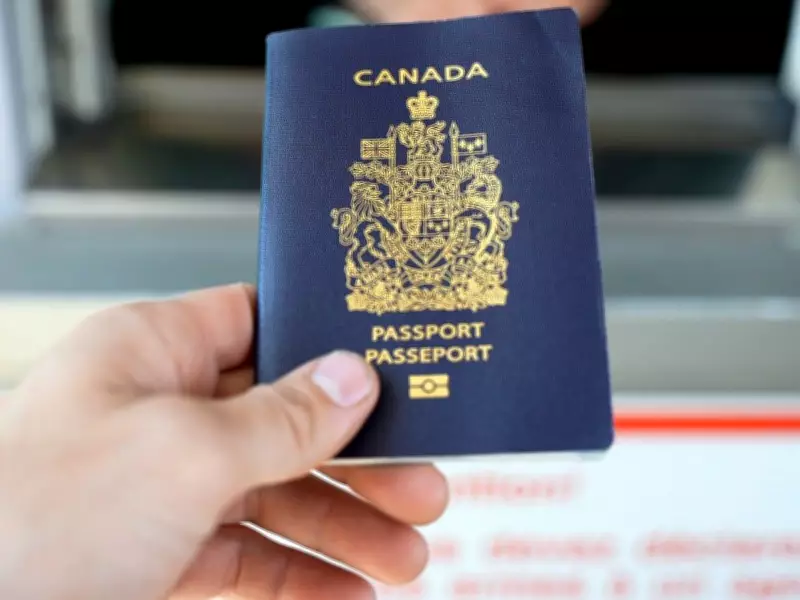
Canadian immigration authorities are experiencing a significant surge in proof of citizenship applications, with data showing a dramatic increase driven primarily by applicants from the United States. This trend coincides with the implementation of new regulations under Bill C-3, which have expanded eligibility for citizenship by descent.
Sharp Increase in Application Volume
According to figures released by Immigration, Refugees and Citizenship Canada (IRCC), the government received 8,900 proof of citizenship applications in January 2026 alone. This represents a substantial jump from the 5,940 applications received during the same month in the previous year, marking an increase of almost 50 percent.
United States Leads Applicant Numbers
Of the January applications, nearly 28 percent—amounting to 2,470 requests—originated from the United States. This makes American applicants the largest single group by a considerable margin. The United Kingdom followed with 290 applications, while Mexico submitted 235. No other country exceeded 140 applications, with most nations contributing 30 or fewer requests.

Between December 15, 2025, and January 31, 2026, IRCC received a total of 12,430 proof of citizenship applications, indicating sustained interest following the implementation of new rules.
Impact of Legislative Changes
The surge follows significant amendments to Canadian citizenship laws. Previously, a first-generation limit introduced in 2009 prevented automatic citizenship for children born outside Canada if their Canadian parent was also born or adopted abroad. This restriction was declared unconstitutional by the Ontario Superior Court of Justice in December 2023, a ruling the federal government chose not to appeal.
New Eligibility Criteria
Under the revised regulations, individuals born after December 15, 2025, outside Canada in the second generation or later may qualify for citizenship if their parent was born or adopted outside Canada to a Canadian citizen. Additionally, that parent must have spent at least 1,095 days—equivalent to three years—in Canada prior to the birth.
Similar provisions apply to adopted individuals, who can now apply for citizenship if they were born and adopted outside Canada in the second generation or later, provided their Canadian parent met the same residency requirement before the adoption.
Processing and Confirmation Statistics
During the initial implementation period from mid-December to late January, IRCC processed 6,280 proof of citizenship applications. Of these, approximately a quarter—1,480 applications—were confirmed as citizens by descent under the new Act.
A departmental spokesperson emphasized that "proof of citizenship applications are not limited to individuals applying on the basis of citizenship by descent." The category also includes other scenarios, such as Canadian-born individuals seeking certificates or applicants requesting replacement documents.
The data underscores how policy shifts can rapidly influence immigration patterns, with the United States emerging as a primary source of renewed interest in Canadian citizenship status.