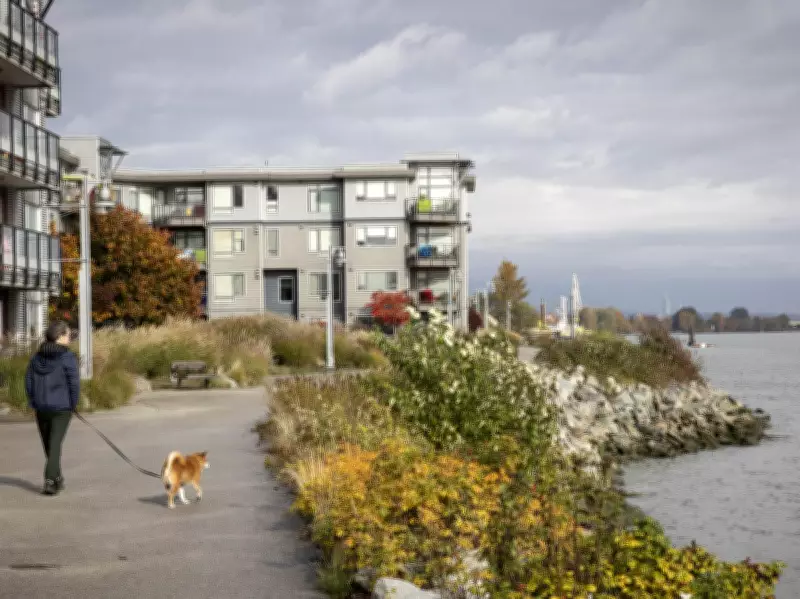
Not far from the Vancouver airport lies an industrial zone of plain, gray warehouses bordered by the Fraser River and serviced by a steady procession of trucks. Two centuries ago, a village of the Cowichan people occupied the site, their presence and name recorded by a ship's captain surveying the region. Now the neighbourhood is the centre of a fight over Indigenous rights that has property holders across British Columbia wondering if they truly own their land.
The province's Supreme Court in August ruled the Cowichan have title to 3.2 square kilometres of the industrial zone in the city of Richmond — land worth about $1.3 billion. Far from settling the issue, the ruling has triggered a backlash that is reshaping politics in famously liberal B.C., as conservative politicians demand the government uphold property rights. The issue is reverberating nationwide, with Liberal Prime Minister Mark Carney telling the House of Commons in April the government 'fundamentally disagrees' with the decision.
Backlash and Political Fallout
The Cowichan, for their part, say protecting property rights is exactly what the ruling does. And it's not the only such dispute wending its way through the province's courts, with Indigenous groups pursuing claims to both public and private lands from Kamloops to Kingcome Inlet. 'One good thing about the colonizers is that they were so arrogant that they wrote everything down,' said Chief Shana Thomas of the Lyackson First Nation, part of the Cowichan Nation. 'So there's just this unarguable history, written by the colonial people of the day, that reinforces what our elders have always said.'

For years, events in B.C. have begun with 'land acknowledgements,' reminding attendees they're on the unceded territories of people who lived there before Europeans settled. Rapprochement with the province's First Nations was a source of public pride. That may now be changing. Half of British Columbians in a recent poll by the Angus Reid Institute said the province is giving Indigenous issues 'too much' attention, up 14 points since the Cowichan ruling.
Immediate Economic Impact
Although the decision is being appealed, its effects were immediate. Richmond's mayor wrote to property holders, warning their ownership was in question. The affected zone's biggest developer, Montrose Property Holdings Ltd., said the judgment prompted a lender to pull out of talks to fund a new warehouse. It has also been blamed for scuttling an offer to buy a nearby hotel. Paul Sullivan, a principal at tax consultant Ryan ULC, called the few homes in the zone 'currently unsaleable.'
Adding fuel to the controversy, a higher court four months later issued a ruling that means the province must bring all its laws into compliance with a 2007 United Nations declaration on the rights of Indigenous peoples worldwide. The question of how best to honour Indigenous land rights has vexed post-colonial societies across much of the globe and continues to defy easy solutions.