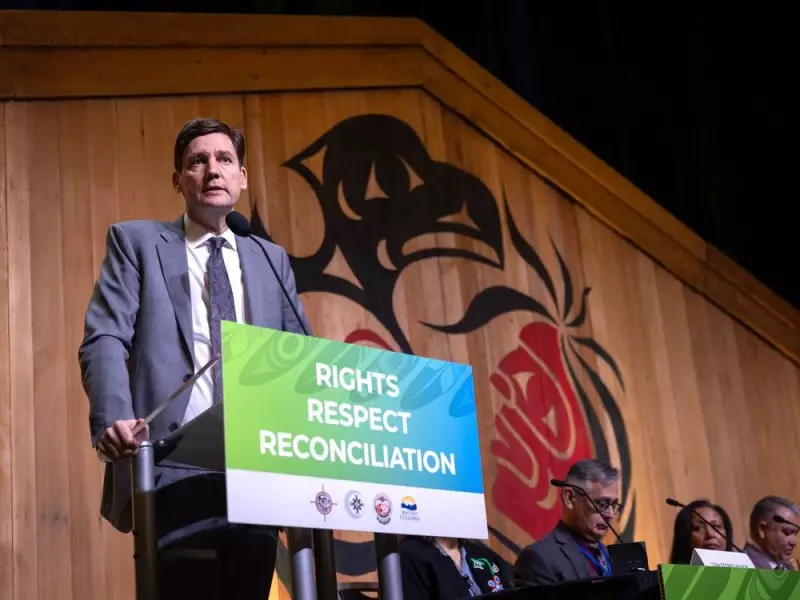
British Columbia's Premier David Eby has declared that his government will introduce legislative changes to reinforce that reconciliation with Indigenous peoples is a political, not a judicial, responsibility. The move comes in response to recent court decisions that the premier has criticized as overreach.
Legislative Response to Court Rulings
Eby stated that the B.C. New Democrats are preparing legislation aimed at discouraging the courts from interfering in government-led reconciliation efforts. The premier specifically pointed to plans to amend the Declaration on the Rights of Indigenous Peoples Act (Declaration Act). "It is government’s responsibility, not the courts, to work with First Nations and address issues of reconciliation," Eby told reporters on Tuesday, January 6, 2026.
The push for amendments follows two significant court cases. The B.C. Court of Appeal cited the Declaration Act and the Interpretation Act when it overturned the province's mineral claims regime. Separately, the B.C. Supreme Court referenced these laws in a decision recognizing Aboriginal title over lands in Richmond, affecting both public and private property.

Eby's Critique of Judicial Overreach
Premier Eby has been vocal in his disapproval, labeling these rulings as instances of judicial overreach that could undermine public support for reconciliation. "Protect private property — this is government’s job, not the courts," he asserted. The provincial government is preparing to appeal the Aboriginal title decision.
Eby emphasized that the amendments will be introduced when the legislative session resumes on February 12, 2026. The goal is to clarify the original intent of the legislature. "The Declaration Act commitments were government-to-government commitments," Eby explained. "They were work that we committed to do in partnership with First Nations governments and it was not for the courts to take over that work."
Balancing Intent with Indigenous Partnership
The premier's position creates a complex dynamic. Both the Declaration Act and the Interpretation Act enshrine the principles of the United Nations Declaration on the Rights of Indigenous Peoples (UNDRIP) and were drafted in consultation with First Nations. Indigenous leaders have already warned the government against watering down this legislation, arguing it would set back reconciliation.
When questioned about this tension, Eby maintained that the court decisions necessitated clarity. "This is too delicate, too tender, too important for that to happen," he said, referring to judicial intervention. However, historical context suggests the government's original position during the 2019 debates may not have been as unequivocal as Eby now presents; the Declaration Act passed unanimously with support from the B.C. Liberal and Green parties.
The upcoming legislative changes will be a critical test for the NDP government, as it seeks to assert its authority in the reconciliation process while honoring its partnerships with Indigenous Nations and upholding the spirit of UNDRIP it legislated.