Tkʼemlúps First Nation Points to Spiritual Protocols and Missing Records in Grave Exhumation Delays
After five years and the allocation of millions of dollars in federal funding, the Tkʼemlúps te Secwépemc First Nation has clarified that spiritual protocols and inaccessible records are the primary reasons why no exhumations have occurred at the site of 215 alleged children's graves announced in 2021. In a recent update, the First Nation highlighted significant challenges in accessing government and Catholic Church records spanning the 88-year operation of the Kamloops Indian Residential School, which have hindered progress.
Background and Initial Announcement
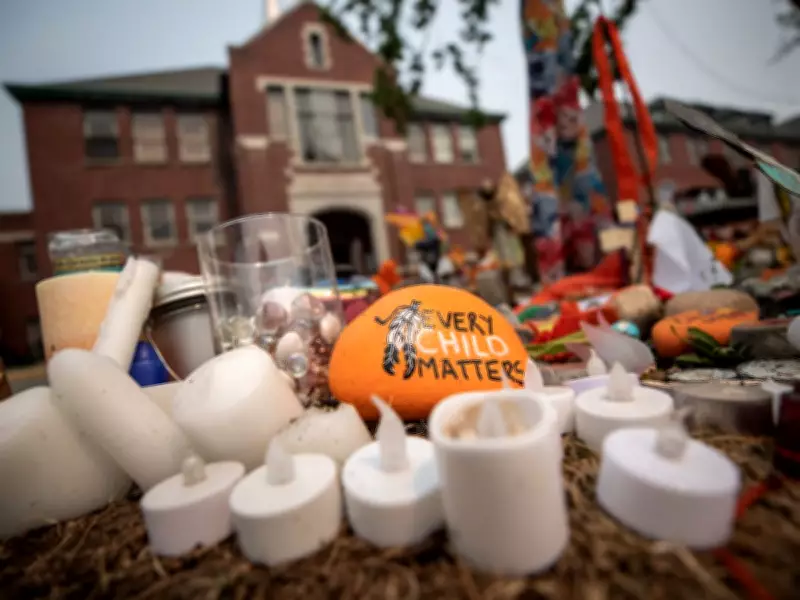
In May 2021, Tkʼemlúps te Secwépemc issued a statement announcing the confirmation of the remains of 215 children at the former Kamloops Indian Residential School location. Chief Rosanne Casimir described the findings as lost children and lost loved ones, noting that some were as young as three years old. By July of that year, Casimir sponsored a resolution at the Assembly of First Nations referring to the discovery as a mass grave, drawing national attention to the tragic legacy of residential schools.
Recent Developments and Challenges
A Tuesday update from Chief Casimir's office, however, omitted references to the 215 figure, the term mass grave, or any confirmation of remains. Instead, it stated that areas of the site cannot confidently be ruled out as burials and attributed the investigation's stall to obstacles posed by the Catholic Church and the Canadian federal government. The statement emphasized that government restrictions on certain records and slow responses have impeded efforts to uncover facts and provide answers swiftly.

Spiritual and Consensus Requirements
The First Nation has underscored that no exhumations will proceed without unanimous agreement from all 38 affected Nations whose ancestors attended the Kamloops Indian Residential School. Indigenous communities place deep importance on honouring and protecting ancestral remains, and achieving consensus among these groups is a critical step in any future actions. This approach reflects a commitment to spiritual protocols and cultural sensitivities, which are paramount in such delicate investigations.
Historical Context and Technological Limitations
Historically, forgotten residential school burials have been confirmed and excavated through archaeological digs, such as a 1974 University of Saskatchewan excavation that exhumed 72 student graves from the Battleford Industrial School. In contrast, the Tkʼemlúps te Secwépemc's initial claim in 2021 was based solely on a ground-penetrating radar survey. While this technology has been used in prior surveys of historic graveyards, it can only identify ground disturbances and becomes less reliable on rocky or uneven soil, highlighting the need for further verification.
Funding and Future Steps
The First Nation has received $12 million in federal funding since 2021 to support the exhumation process. Despite this financial backing, the investigation remains in a holding pattern due to the aforementioned challenges. Chief Casimir's office has stated that no interviews will be granted at this time, and updates will be provided as the investigation develops, emphasizing a cautious and respectful approach to this sensitive matter.