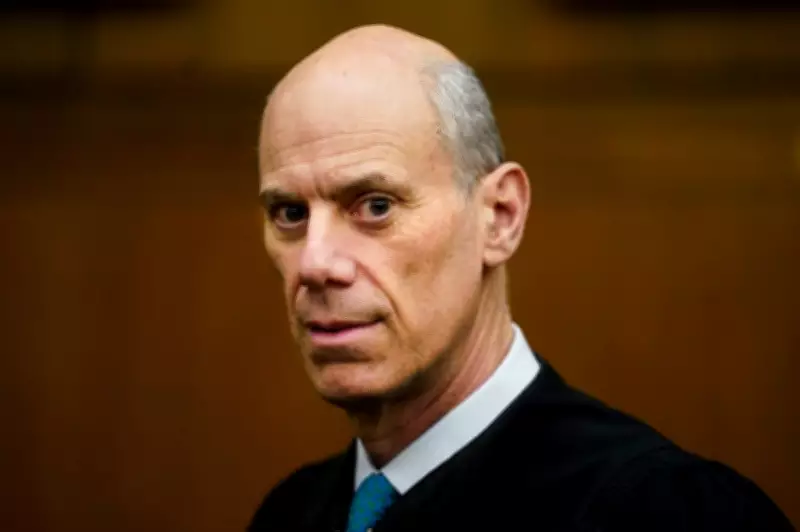
U.S. Appeals Court Halts Contempt Probe into Trump Over Deportation Flights
A federal appeals court has ruled that a judge must cease what it described as an "intrusive" contempt investigation into former U.S. President Donald Trump and his administration. The probe centered on allegations that the administration failed to comply with a court order to stop deportation flights that included transferring Venezuelan migrants to El Salvador.
Court Finds Judge Abused Discretion
The majority opinion from a three-judge panel of the U.S. Court of Appeals stated that Chief Judge James Boasberg abused his discretion by proceeding with criminal contempt proceedings related to deportation flights in March 2025. The court emphasized that the Trump administration holds a "clear and indisputable" right to terminate these contempt proceedings.
Circuit Judge Neomi Rao, writing for the majority, argued that criminal contempt is only applicable when an order is clear and specific. She contended that Boasberg's March 2025 order did not explicitly prohibit the government from transferring plaintiffs into Salvadoran custody, thereby undermining the basis for the investigation.

A Victory for Trump's Immigration Policies
This ruling is widely perceived as a significant victory for Trump's deportation initiatives. The administration has consistently portrayed Boasberg, who was appointed by former President Barack Obama, as an activist judge overstepping his authority to interfere with White House policy decisions.
However, critics have expressed strong concerns about the implications of this decision. Lee Gelernt, a lawyer for the American Civil Liberties Union, stated that the panel's opinion represents "a blow to the rule of law." He emphasized that the executive branch, including the president, must respect court orders, and argued that the Trump administration willfully violated the court's directive in this instance.
Background of the Controversial Deportation Flights
The controversy stems from a temporary restraining order issued by Boasberg in March 2025, which aimed to halt the administration from transferring a group of Venezuelan migrants to El Salvador under an 18th-century wartime law. Despite this order, some migrants were subsequently flown to El Salvador, a decision attributed to then-Homeland Security Secretary Kristi Noem.
Boasberg alleged that the Trump administration expedited these deportations in defiance of his order, noting that he provided ample opportunity for the administration to rectify or explain their actions, but found their responses unsatisfactory.
Political Divisions and Legal Repercussions
The legal battle has been marked by intense political divisions. The Justice Department previously filed a misconduct complaint against Boasberg, accusing him of making improper comments about the administration. Trump himself called for Boasberg's impeachment, drawing a rebuke from Supreme Court Chief Justice John Roberts.
The appeals court panel's decision reflected these partisan lines. Judges Neomi Rao and Justin Walker, both Trump appointees, formed the majority. In contrast, Judge J. Michelle Childs, a nominee of former Democratic President Joe Biden, dissented. Childs warned that the majority's ruling undermines judicial authority and could have far-reaching consequences for future litigants, potentially allowing them to argue against contempt findings based on their own interpretations of court orders.
This case highlights ongoing tensions between judicial oversight and executive power in U.S. immigration policy, with significant implications for the rule of law and the enforcement of court mandates.