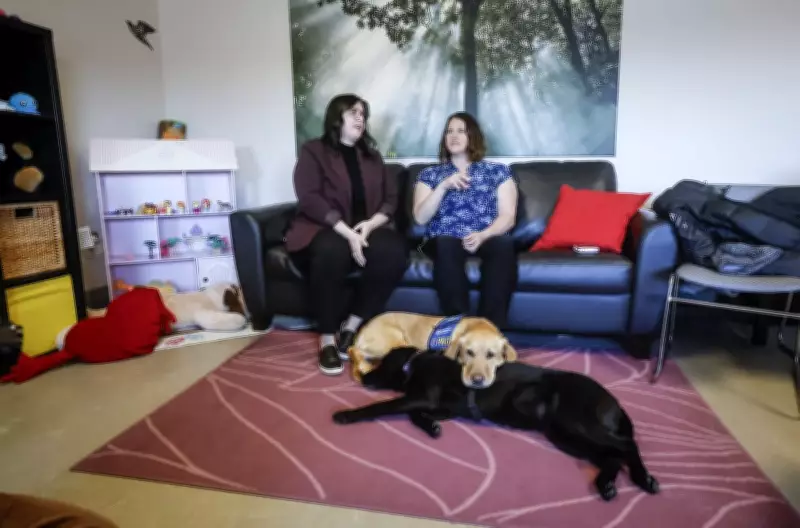
Manitoba Implements Accredited Facility Dog Program to Aid Court Users
In a compassionate initiative aimed at easing the often traumatic experience of navigating the legal system, the province of Manitoba has officially launched an accredited facility dog program. This innovative program deploys specially trained canine companions to provide emotional support and comfort to victims, witnesses, and other individuals involved in court proceedings. The dogs, which undergo rigorous certification, are integrated into victim services to help reduce anxiety and stress during what can be a daunting judicial process.
A Furry Welcome in the Courtroom
The program was highlighted in a recent media demonstration at the Manitoba Law Courts, where victim service workers Carla Deeley and Deanna Shaw introduced their accredited facility dogs, Bagel and Glossy. These dogs are not ordinary pets; they are professionally trained to remain calm in high-pressure environments and to interact gently with people who may be experiencing emotional distress. Their presence is designed to create a more welcoming atmosphere, particularly in dedicated spaces like the child victim family room, where young individuals and their families can prepare for court appearances.
The role of these facility dogs extends beyond mere companionship. Research and practical experience have shown that interactions with therapy animals can lower blood pressure, reduce cortisol levels, and alleviate symptoms of anxiety and depression. For victims of crime, especially children, having a non-judgmental, furry friend by their side can make the difference between feeling overwhelmed and feeling supported. The dogs help to bridge the emotional gap that often exists in formal legal settings, fostering a sense of safety and trust.

How the Program Operates
Manitoba's facility dog program is structured around accredited animals that work alongside trained victim service professionals. These dogs are selected for their temperament and undergo extensive training to ensure they can handle the unique challenges of a courtroom environment. They are taught to respond to cues from their handlers and to remain focused despite distractions. The program is part of a broader trend in Canada and internationally, where animal-assisted interventions are increasingly recognized for their therapeutic benefits in legal and healthcare contexts.
The implementation of this program reflects a growing awareness of the need for trauma-informed approaches within the justice system. By addressing the emotional and psychological needs of victims, Manitoba aims to improve the overall experience of court users, potentially leading to more effective testimony and better outcomes for those seeking justice. The dogs serve as a tangible symbol of the province's commitment to compassionate care, helping to humanize an often impersonal process.
Benefits and Future Prospects
The benefits of facility dogs in court settings are multifaceted. For victims, the presence of a dog can provide a calming influence, making it easier to recall events and communicate with legal professionals. For court staff and lawyers, the dogs can help create a more relaxed environment, improving interactions with vulnerable individuals. Additionally, the program has the potential to reduce the secondary trauma that victims might experience from repeated retellings of their stories in a sterile setting.
Looking ahead, Manitoba officials are considering expanding the program to reach more courtrooms and include additional accredited dogs. The success of initial deployments, as seen with Bagel and Glossy, suggests that facility dogs could become a staple in victim services across the province. This initiative aligns with global best practices in victim support, emphasizing holistic care that addresses both legal and emotional needs.
In summary, Manitoba's facility dog program represents a significant step forward in making the court system more accessible and less intimidating for victims. By leveraging the therapeutic power of canine companions, the province is setting a precedent for compassionate justice that other regions may look to emulate. As these furry faces continue to greet those in need, they offer not just comfort, but a beacon of hope in challenging times.