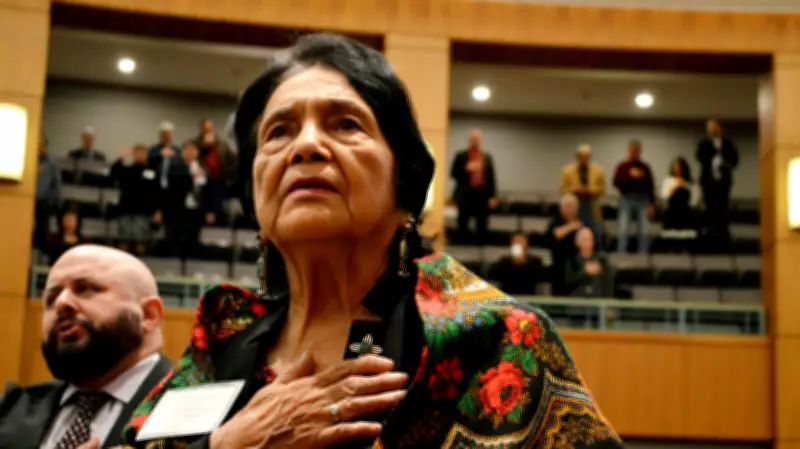
Civil Rights Icon Dolores Huerta Reveals She Was Victim of Cesar Chavez's Sexual Abuse
In a profound and deeply personal disclosure, civil rights legend Dolores Huerta has come forward to share that she was a victim of sexual abuse by celebrated labor leader Cesar Chavez. This revelation follows the publication of a comprehensive, multi-year investigation by The New York Times into Chavez's sexual misconduct, which has sent shockwaves through activist communities and historical circles alike.
A Secret Kept for Six Decades
Huerta, who co-founded the National Farm Workers Association alongside Chavez and activist Gilbert Padilla, issued a powerful statement on Wednesday morning via a post on Medium. "I am nearly 96 years old, and for the last 60 years have kept a secret because I believed that exposing the truth would hurt the farmworker movement I have spent my entire life fighting for," she wrote. This admission highlights the immense personal sacrifice and internal conflict she endured while maintaining silence to protect a cause she helped build from the ground up.
The Decision to Speak Out
Huerta explained that the recent investigative report compelled her to break her long-held silence. "I have encouraged people to always use their voice," her statement continued. "Following the New York Times' multi-year investigation into sexual misconduct by Cesar Chavez, I can no longer stay silent and must share my own experiences." This decision underscores her commitment to truth and accountability, even when it involves painful personal history.

Details of the Abuse
In her statement, Huerta provided harrowing details of two separate sexual encounters with Chavez during the 1960s, when she was a young mother deeply involved in the farmworker movement. "The first time I was manipulated and pressured into having sex with him, and I didn't feel I could say no because he was someone that I admired, my boss and the leader of the movement I had already devoted years of my life to," she recounted. This illustrates the power dynamics and emotional coercion at play.
She further described a second, more violent incident: "The second time I was forced, against my will, and in an environment where I felt trapped." These accounts reveal a pattern of abuse that exploited her position within the movement and her personal admiration for Chavez.
Impact on the Farmworker Movement
Huerta's disclosure adds a complex layer to the legacy of the farmworker movement, which has long been celebrated for its achievements in labor rights and social justice. Her willingness to now speak out, despite fears of damaging the movement's reputation, marks a significant moment in reassessing historical narratives and acknowledging the full humanity—and flaws—of its leaders.
This story is developing as reactions pour in from historians, activists, and the public. The revelations challenge previously held perceptions of Chavez and highlight the ongoing importance of addressing sexual misconduct within social justice movements.