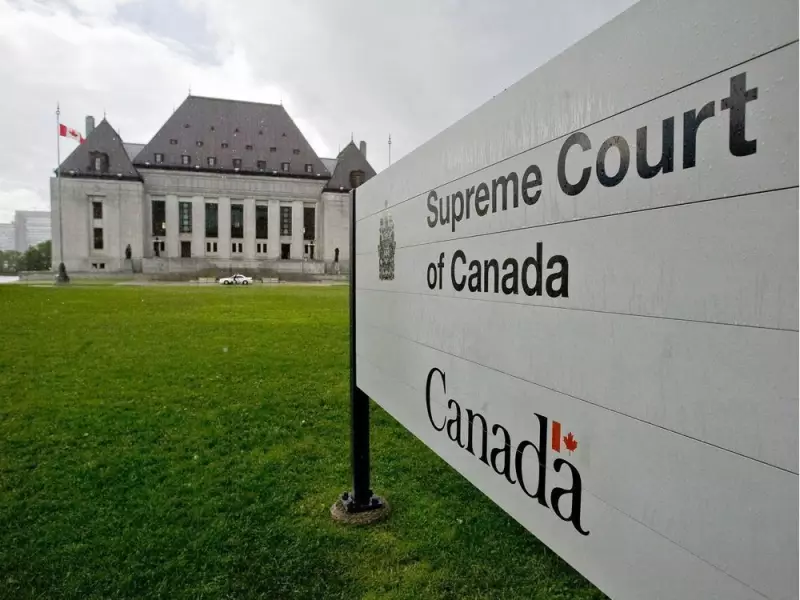
The political landscape in Canada is reeling from a controversial Supreme Court of Canada decision that has declared one-year mandatory minimum jail sentences for possessing or accessing child sexual abuse material as unconstitutional. The ruling has ignited a firestorm of criticism, particularly from Conservative voices who accuse the Liberal government of failing to protect children.
A Divided Court and a Horrific Crime
In a heart-wrenching 5-4 decision, the Supreme Court delivered a verdict that has shocked many Canadians. The case centered on the constitutionality of one-year mandatory minimum sentences for individuals convicted of possessing or accessing videos and images depicting child sexual abuse.
The details of the cases that led to this ruling are particularly disturbing. One of the offenders was found with 317 images of children, with approximately 90 percent of the material featuring girls between the mere ages of three and six years old. Another offender possessed hundreds of videos involving children from five to ten years old.

Political Fallout and Liberal Inaction
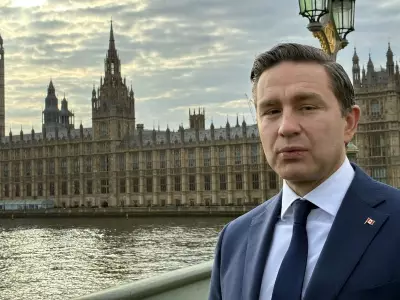
The response from political leaders was swift and starkly divided. Conservative Leader Pierre Poilievre stated firmly that he would use the notwithstanding clause to overturn the ruling, a move designed to allow Parliament to temporarily override certain Charter rights.
He was joined by several premiers, including Danielle Smith of Alberta, Doug Ford of Ontario, and Wab Kinew of Manitoba, who collectively urged the federal Liberal government to take action. However, Justice Minister Sean Fraser exacerbated the situation by stating he would not use the notwithstanding clause to challenge the court's decision.
Further criticism was directed at Buckley Belanger, the lone Liberal MP in Saskatchewan, who has remained silent on the issue. For a representative who frequently asserts the Liberal Party's support for Saskatchewan, his lack of commentary on protecting children from what Warren Steinley calls "some of the worst crimes imaginable" was noted as a significant absence.
A Pattern of Inaction?
Warren Steinley expressed extreme disgust with the Supreme Court's ruling, noting that this is not the first time the Liberals have chosen not to act in the face of controversial court decisions. He drew a comparison to the former Conservative prime minister Stephen Harper, who enacted laws to ensure multiple murderers like Paul Bernardo and Clifford Olson could receive consecutive sentences.
This policy was designed to prevent the families of victims from enduring traumatizing parole hearings repeatedly. However, in 2022, the Supreme Court of Canada ruled that consecutive sentences were unconstitutional following an appeal launched by mass murderer Alexandre Bissonnette, further highlighting the ongoing tension between the judiciary and legislative approaches to sentencing for severe crimes.
The ruling and the government's response have set the stage for a significant political and legal debate concerning the protection of children, the role of mandatory minimum sentences, and the use of the notwithstanding clause in Canadian law.