Canada Issues Travel Warnings for Middle East Amid Escalating Iran-Israel Conflict
In response to escalating military hostilities between Israel, the United States, and Iran's regime, Global Affairs Canada has issued urgent travel warnings advising Canadians to avoid most of the Middle East. The advisory, updated on March 3, 2026, comes as retaliatory strikes have targeted multiple nations across the region, creating volatile security conditions and widespread airspace closures.
Regional Airspace Disrupted by Military Actions
The ongoing conflict has severely impacted air travel throughout the Middle East and Persian Gulf. As of Tuesday, much of the airspace remains closed, with air traffic control centers in many regions suspending new routes. Commercial flights that typically transit the region are being rerouted north over Turkmenistan and Armenia into Turkey, or south across Egypt, Saudi Arabia, and Oman.
Israeli and American airstrikes targeting terrorist infrastructure in Iran and Lebanon have prompted retaliation from Iran's Islamist regime, resulting in missiles being launched toward Israel and numerous Middle Eastern and Persian Gulf nations with friendly relations to the United States.

Specific Country Advisories and Security Concerns
Global Affairs Canada has identified several specific countries where travel should be avoided due to immediate security threats:
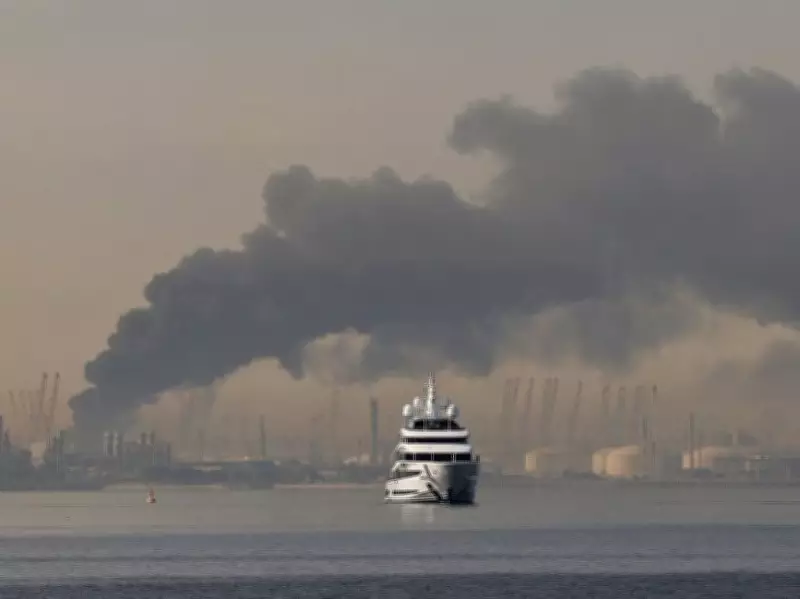
- United Arab Emirates: Iranian missiles struck Dubai International Airport over the weekend, killing three people, injuring several others, and filling terminals with black smoke. Dubai's airport authority closed one of the world's busiest airports following the attack. Limited flights resumed on Monday, with Emirates Airlines prioritizing passengers already booked. Etihad Airlines based in Abu Dhabi plans to keep aircraft grounded until at least Wednesday. "Missiles, drones and other projectiles could strike targets at any time," the advisory warns, noting the security situation could "deteriorate significantly without notice." Canadians in the UAE are advised to leave as soon as possible, with land border crossings into Saudi Arabia or Oman as potential exit routes.
- Lebanon: Canada has returned Lebanon to its highest warning level of "avoid all travel" after briefly lowering advisories last month. The security situation is described as "volatile," with warnings to avoid areas under threat of airstrikes including southern suburbs of Beirut, the Beqaa valley, and Palestinian camps. "Previous air strikes reached populated areas across Lebanon, including central Beirut," the advisory states, noting that consular services during active conflict will be limited to essential services.
- Bahrain and Kuwait: Iranian aggression has prompted warnings for both nations. In Bahrain, missiles targeted the U.S. Navy Central Command headquarters, residential buildings, hotels, and Amazon warehouses. Bahrain had closed its airspace and the King Fahd Causeway to Saudi Arabia, with limited flights expected to resume later this week. In Kuwait, Iranian drones were intercepted before striking, though smoke was reported near the U.S. embassy in Kuwait City. Kuwaiti airspace remains closed, with Canadians advised to shelter in place or consider land border crossings into Saudi Arabia.
- Israel: Canada has placed the entire country of Israel at its highest warning level, including Jerusalem, due to "ongoing military activities." Israelis have endured days of retaliatory missile and drone attacks from Iran, with warnings that security could "significantly deteriorate" without notice. All flights in and out of Ben Gurion Airport are cancelled, though officials indicate possible resumption by Thursday.
Additional Nations Under Travel Advisory
Other Middle Eastern and Persian Gulf nations where Canada warns against travel include Qatar, Iran, Iraq, Syria, and Yemen. Global Affairs Canada emphasizes that Canadians in countries with travel advisories should register with local consular officials and prepare contingency plans for potential evacuation.

The agency specifically notes that evacuation assistance by the Canadian government cannot be guaranteed, urging travelers to develop independent exit strategies. As military activities continue to escalate across the region, the situation remains fluid with potential for rapid deterioration of security conditions.