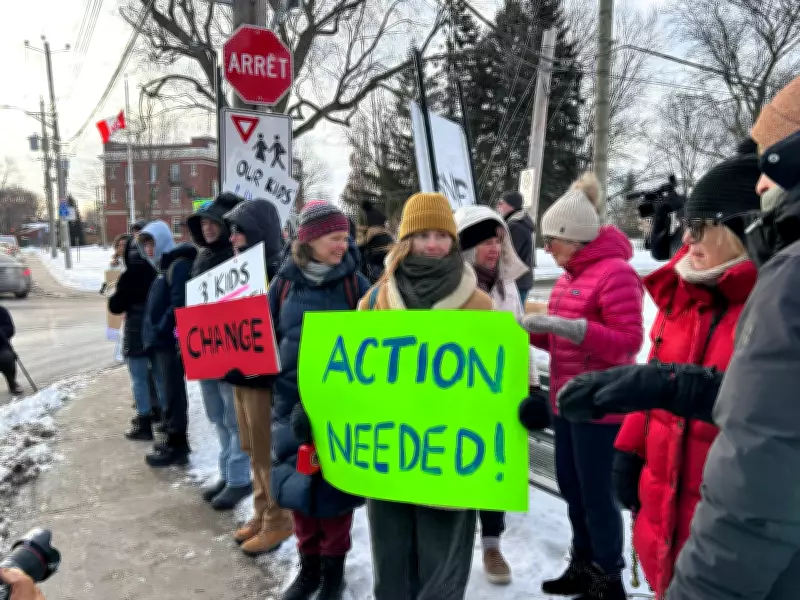
In a significant victory for community safety, a crossing guard will be assigned to a busy intersection in Montreal West, following persistent advocacy by concerned parents. The decision comes after a rally held by parents of students at Royal West Academy, who demanded enhanced protection at an intersection notorious for its history of collisions.
Parent Advocacy Drives Change
The rally, which took place on Tuesday, February 24, 2026, saw parents gathering to highlight the urgent need for a crossing guard. They emphasized the intersection's dangerous reputation, citing multiple past incidents that posed risks to pedestrians, especially students commuting to and from school. This grassroots movement underscored the community's commitment to ensuring safer streets for children and residents alike.
History of Safety Concerns
The intersection in question has long been a point of concern due to its high traffic volume and previous collisions. Parents argued that without proper supervision, students faced unnecessary hazards during peak hours. Their efforts brought attention to the broader issue of pedestrian safety in urban areas, prompting local authorities to take action.

The assignment of a crossing guard marks a proactive step towards mitigating these risks. It reflects a responsive approach to community needs, with officials acknowledging the importance of preventive measures in accident-prone zones. This move is expected to enhance safety for all pedestrians, not just students, by providing guidance and oversight at critical times.
Broader Implications for Traffic Safety
This development highlights the power of community engagement in influencing public safety policies. It serves as a reminder that local activism can lead to tangible improvements in infrastructure and services. As cities like Montreal West continue to grow, such initiatives become increasingly vital in addressing evolving urban challenges.
The successful campaign by Royal West Academy parents sets a precedent for other neighborhoods facing similar issues. It demonstrates how collective action can drive positive change, ensuring that safety remains a top priority in municipal planning and operations.