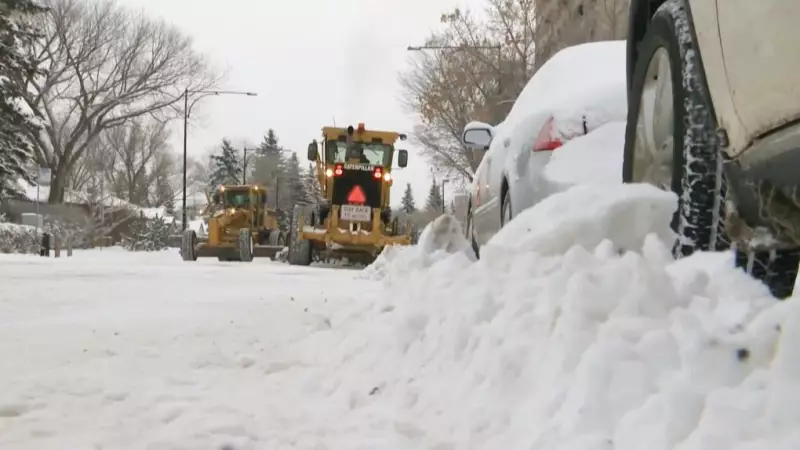
The City of Edmonton has announced that its crews will begin clearing snow from residential neighbourhoods starting Monday, January 12. This city-wide operation aims to address the accumulated snowfall and improve travel conditions for residents on local streets.
Operation Details and Schedule
The residential blitz follows the city's priority clearing of major arterial roads, bus routes, and collector streets. The work is scheduled to commence on Monday, January 12. City officials have coordinated resources to tackle the significant snowpack that has built up in communities across Edmonton.
Residents are advised that crews will be working through neighbourhoods systematically. The process involves plowing snow from the roadway to the sides, which may temporarily limit street parking and access. The city asks for cooperation from homeowners to facilitate the efficient progress of the equipment.

What Residents Need to Know
To ensure the snow clearing operation is successful, the City of Edmonton has issued guidelines for residents. Vehicles must be removed from residential streets during the scheduled clearing for a specific area. Notifications are typically issued through signage in the affected neighbourhoods.
Residents should also be aware that snow windrows from the plows may be left at the end of driveways. The city's policy is that property owners are responsible for clearing this windrow to gain access to the street. The operation's focus is solely on the public roadway, not on private property or sidewalks adjacent to homes.
City-Wide Impact and Coordination
This large-scale residential clearing effort is a standard part of Edmonton's winter response plan. The timing is based on snowfall accumulation, resource availability, and forecasted weather conditions. The goal is to complete the work as swiftly as possible across all residential zones.
The city encourages residents to stay informed about the schedule for their specific area by checking the official City of Edmonton website or 311 service updates. Patience is requested as crews work through what is a logistically complex task covering hundreds of kilometres of local roadways.