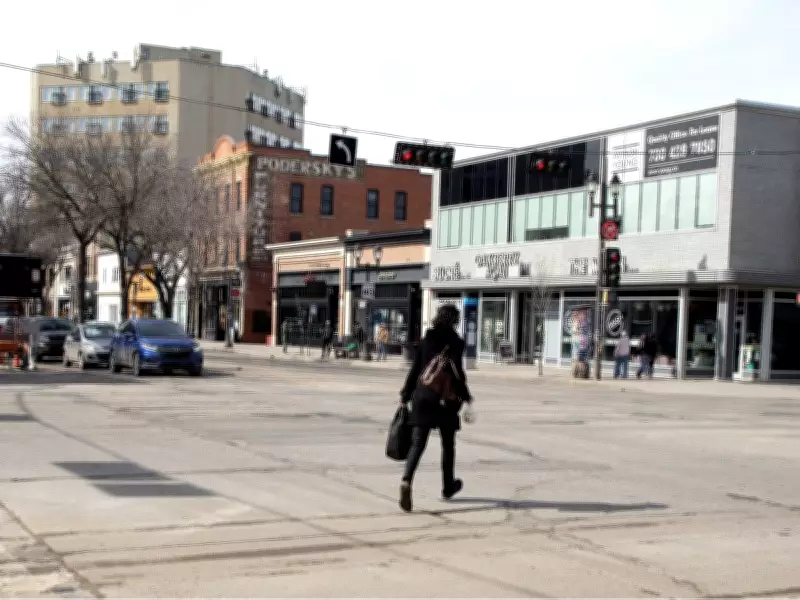
Just five years after implementing diagonal "scramble" crosswalks on Whyte Avenue—innovative pedestrian crossings that have proven effective—the City of Edmonton is already considering their removal. This potential decision raises serious questions about fiscal responsibility and urban planning priorities, as public funds would be spent dismantling infrastructure that isn't broken.
Questionable Urban Planning Decisions
Even more perplexing is the parallel proposal to convert 118 Street, north of 100 Avenue, into a one-way street to accommodate a new bike lane. This comes despite the existence of an established north-south bike corridor already operating efficiently on 121 Street. The conversion would deliberately restrict access to five highrise apartment and condominium buildings, creating unnecessary hardships for hundreds of residents.
Impact on Daily Life and Accessibility
Residents would face numerous challenges including reduced vehicle access, more complicated drop-offs and pickups, disrupted delivery services, and increased congestion on already constrained streets. Service providers, visitors, and emergency vehicles would all be forced to navigate an artificially restricted route—a completely avoidable problem created by municipal decision-making.

When successful infrastructure is dismantled and livable neighborhoods become less accessible for the people who reside there, citizens are right to question where common sense has gone in Edmonton's urban planning process.
Broader Educational Policy Concerns
The debate extends beyond infrastructure to educational policy, with recent discussions about government involvement in public school curriculum sparking controversy. Some argue that democratically elected representatives should have input into how tax dollars are spent on education, while others express concerns about political influence in classrooms.
Classroom Politics and Curriculum Control
Recent opinion pieces have highlighted tensions between government oversight and educational autonomy. Critics question whether certain educational approaches represent ideological positions rather than pedagogical best practices, while others defend academic freedom and professional expertise in curriculum development.
The conversation reflects broader societal debates about the appropriate balance between democratic accountability and professional independence in public institutions, with implications for how future generations are educated about complex social and political issues.