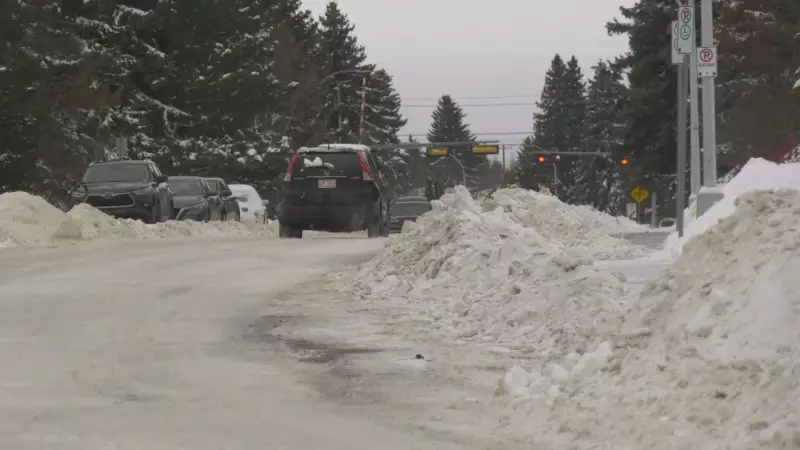
A resident in south Edmonton is expressing significant frustration after a massive windrow left by city snow plows completely blocked access to their property. The incident occurred in the Duggan neighbourhood on December 29, 2025, following recent heavy snowfall and subsequent grading operations.
Snow Pile Creates Major Access Issue
The windrow, a long ridge of compacted snow and ice pushed to the side of the road by graders, was deposited directly across the resident's driveway and sidewalk. This effectively sealed off their property, making it impossible to enter or exit with a vehicle and creating a pedestrian hazard. The resident, who was not named in initial reports, described the situation as an unacceptable failure of the city's snow clearing protocol.
City crews had been actively plowing streets throughout the area to clear the accumulation from recent winter storms. While the main roadways were cleared, the byproduct of this work—the windrows along the curbs—often becomes a secondary problem for homeowners and businesses. This particular case in Duggan is a stark example of the inconvenience and accessibility issues these piles can cause.

Ongoing Winter Maintenance Challenges
Windrow complaints are a recurring seasonal issue in Edmonton and many other Canadian cities that experience heavy snowfall. The city's policies typically prioritize clearing travel lanes on major roads and bus routes first. Residential street clearing, and the subsequent removal or dispersal of windrows from driveways, often comes later in the process, depending on the severity and duration of a snow event.
This incident raises questions about coordination and communication between municipal operations and residents. While plowing is essential for safe roadways, the resulting barriers to private property access can have serious consequences, potentially blocking emergency vehicles, home care services, or residents with mobility challenges.
Seeking Solutions and Accountability
The unhappy resident's experience underscores a broader municipal debate about the balance between efficient city-wide snow removal and minimizing individual disruption. Residents are often left to clear the windrows themselves, which can be a physically demanding task involving heavy, icy snow, or they must wait for a follow-up visit from city equipment.
As winter continues, this case in the Duggan neighbourhood serves as a reminder for municipalities to continually evaluate their snow-clearing strategies. The goal is to ensure public safety on the roads without unduly transferring the burden onto individual property owners. For the affected resident, the immediate need is a swift return of clear access to their home, a fundamental expectation for any taxpayer during a Canadian winter.