Edmonton Confronts Massive Infrastructure Deficit Amid Population Surge
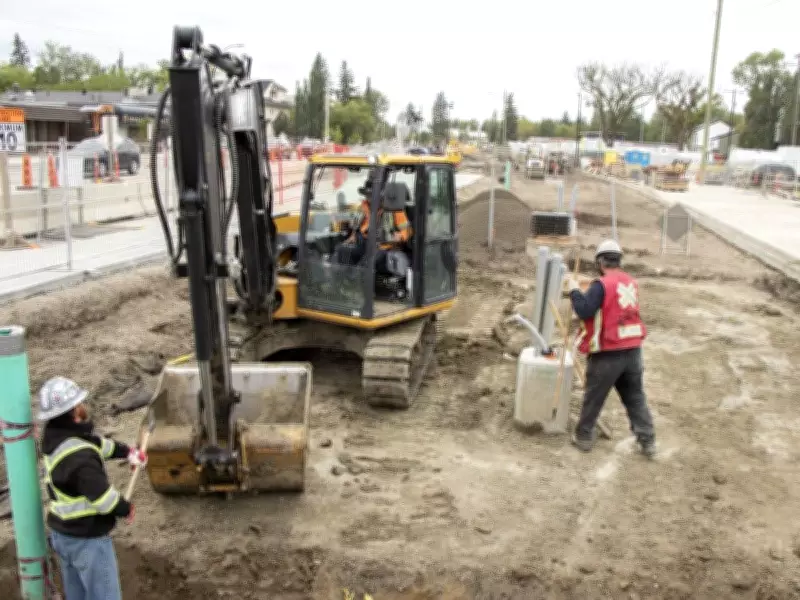
Edmonton Mayor Andrew Knack has issued a stark warning about the city's "significant infrastructure deficit," revealing a $1.5 billion renewal shortfall that threatens essential services as the municipality braces for explosive growth over the coming decade.
Aging Fleet and Facilities Strain Under Pressure
Officials disclosed to the Infrastructure Committee that approximately one-third of Edmonton's enforcement, policing, and waste management vehicles are in poor condition, barely holding together as the city manages nearly $40 billion in infrastructure assets. The situation is particularly dire for waste management, where 33.2 percent of the fleet is listed in poor condition, and policing, where 30.7 percent of vehicles and 27.6 percent of equipment are similarly degraded.
"We have a renewal deficit of about $1.5 billion and we're not going to be able to do that all within the next four-year budget," Mayor Knack stated. "I think realistically we're going to see a pretty big shift into renewal into 2026 with very limited growth, unless we can find those strategic partnerships or there's a substantial increase in funding from either order of government, which I think is unlikely."

Asset Inventory Reveals Mixed Condition Status
The city's comprehensive asset assessment shows Edmonton owns $39.8 billion in assets, representing a $5.1 billion increase since 2023. While 54.2 percent of assets are considered in very good or good condition and 33.2 percent in fair condition, 10.2 percent remain in poor condition. This represents a slight improvement of 0.3 percent since 2023, but the overall picture remains concerning.
Remarkably, despite Edmonton's existence since 1905, the city only began maintaining a formal inventory of its assets in 2000. What started as 80 asset groupings has expanded to 800 today, reflecting the addition of software, IT technology, and new fleet vehicles that didn't exist at the turn of the millennium.
Growing Demands Outpace Infrastructure Capacity
Administration officials told the committee that much of the city's infrastructure is being used beyond initial capacity expectations. Arenas and skating rinks, for instance, are experiencing increased utilization due to greater-than-anticipated popularity of youth and adult sports programs.
Ward O-day'min Councillor Anne Stevenson suggested the city may need to consider selling off some assets to cover maintenance costs for others, highlighting the difficult financial decisions ahead. The city's recreation and culture assets alone carry a replacement cost of $4.24 billion, while policing infrastructure totals $600 million across 800 vehicles, 27 buildings, and $139 million in equipment.
Environmental Protection Systems Falling Behind
The Environmental Protection category, encompassing parkland and waste management systems, represents one area particularly vulnerable to deterioration. Edmonton maintains 53 buildings dedicated to waste management and 380 vehicles for trash hauling, with the fleet's poor condition rate exceeding one-third.
A dedicated renewal fund won't become operational until 2029, though Mayor Knack expressed desire for earlier implementation. The mayor also noted officials are exploring "dual-use" infrastructure opportunities, particularly following announcements of $290 billion in capital defence spending that might offer partnership possibilities.
As Edmonton's population continues expanding, increasing pressure on existing infrastructure while demanding new additions to the city's inventory, municipal leaders face the daunting challenge of balancing growth with maintenance of essential services that residents depend upon daily.