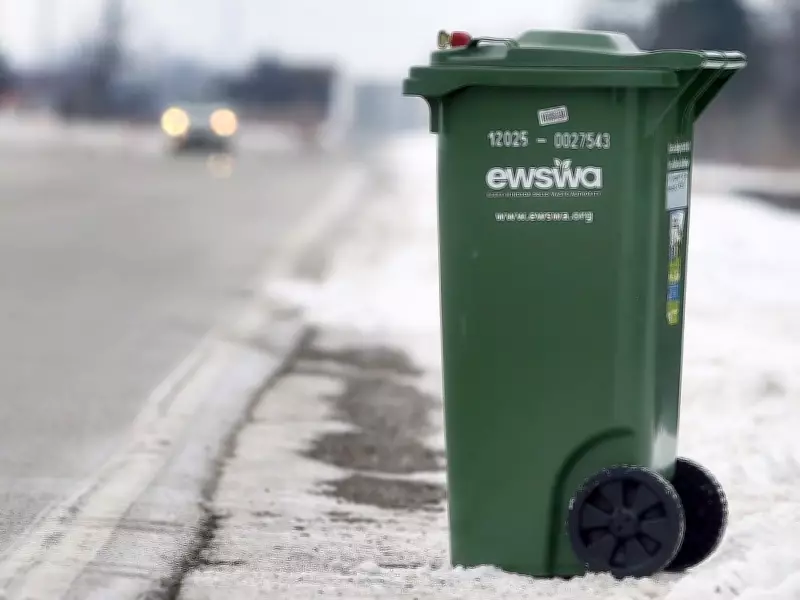
Essex County officials are poised to consider significant financial relief measures for residents facing green bin program charges, with a formal debate scheduled for the upcoming council meeting. The proposal, introduced by Lakeshore Mayor Tracey Bailey, seeks to alleviate the burden of user fees that have sparked concerns about economic pressures on local households.
Motion to Shift Funding Model
During Wednesday's council session, Mayor Bailey presented a notice of motion that would fundamentally alter how the county's organic waste program is financed. Rather than relying exclusively on homeowner fees, the motion advocates for utilizing county reserves and the general tax levy to cover costs. This initiative comes as residents in several municipalities prepare to see their first green bin charges appear on June tax bills.
Current Fee Structure and Timeline
The green bin program launched in October across Essex, LaSalle, Lakeshore, and Tecumseh, with residents in these Phase 1 communities facing projected annual fees ranging from $154.13 to $159.03. Meanwhile, Leamington, Kingsville, and Amherstburg are scheduled to begin their programs this fall, with their first charges appearing on the June 2027 tax bills at approximately $33-34 for partial-year service.

Notably, the initial tax bills for Phase 1 municipalities will include retroactive charges covering fifteen months of service, resulting in higher one-time payments. Essex taxpayers will see a $186.11 charge, Lakeshore residents $187.84, LaSalle homeowners $187.87, and Tecumseh property owners $183.64 on their June statements.
Proposed Relief Plan Details
Mayor Bailey's comprehensive proposal outlines a multi-year transition away from user fees:
- 2026: Full funding from county reserves for all municipalities
- 2027: 50% reserve funding for Phase 1 communities, 100% for Phase 2
- 2028: 50% reserve funding for Phase 2 municipalities
- 2029: Complete transition to general tax levy funding
"County council recognizes that the charging of the user fee may cause undue financial pressures to the residents of the county and at a time of extreme economic uncertainty," Bailey stated while introducing her motion.
Municipal Implementation Differences
The funding approach varies across the region, with Windsor financing its program through capital funds while Essex County employs a hybrid model incorporating taxpayer fees. This discrepancy has prompted discussions about equitable solutions for residents facing similar waste management requirements but different financial obligations.
The green bin initiative represents a significant step in regional waste reduction efforts, but its financial implementation has raised concerns about affordability. As economic conditions remain challenging for many households, the proposed relief measures aim to balance environmental objectives with fiscal responsibility.
Essex County council will reconvene on March 18 to debate the motion, with potential implications for thousands of residents across seven municipalities. The outcome could establish a precedent for how municipalities approach the financing of essential environmental services during periods of economic strain.