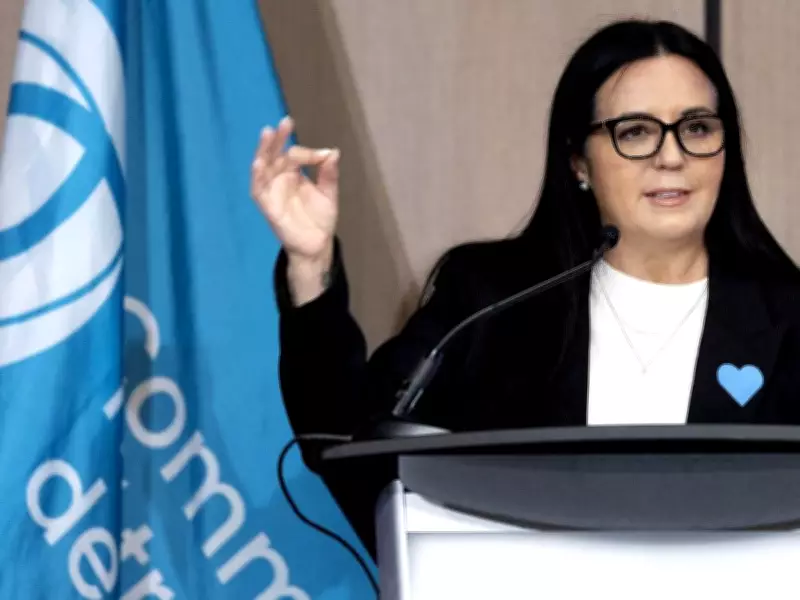
Montreal Mayor Soraya Martinez Ferrada has issued a compelling call for the Greater Montreal region to harness its collective political influence in lobbying the Quebec government on pressing priorities such as housing, public transit, and the escalating homeless crisis. Delivering her inaugural speech to the Communauté métropolitaine de Montréal (CMM) on Thursday, February 19, 2026, Martinez Ferrada emphasized the need for collaboration rather than confrontation, stating, "We don't want confrontation; we just want to be at the table."
A Unified Voice for Regional Challenges
In her address to mayors and councillors gathered at a downtown hotel, Martinez Ferrada asserted that the CMM must evolve into an indispensable voice for the Quebec government. The CMM, which encompasses 82 municipalities including Montreal, Longueuil, and Laval, serves as a critical platform for regional coordination. As Montreal's mayor, Martinez Ferrada also holds the presidency of the CMM, and she pledged to be an active leader, planning visits not only to member municipalities but also to other regions across Quebec to foster broader alliances.
Addressing the Housing and Homelessness Crisis
The mayor highlighted the housing crisis as a top priority, noting that a recent survey indicates approximately one in five tenants in the region are struggling to afford rent. She warned that this crisis directly fuels the rise in homelessness, which has expanded from urban centers to smaller towns and municipalities in recent years. "It should be a collective wake-up call," Martinez Ferrada declared, urging municipalities to work together in developing solutions and advocating for provincial support to mitigate these interconnected issues.

Public Transit and Infrastructure Development
On the topic of public transit, Martinez Ferrada stressed the imperative to tackle traffic congestion and secure stable, recurring funding for infrastructure projects. She acknowledged existing challenges but pointed to the REM's new Deux-Montagnes line as a success story, illustrating what can be achieved through coordinated efforts. "It's not perfect, but it's important to have done it," she remarked, adding that such projects stimulate residential development, reshape urban centers, and contribute significantly to municipal growth.
Economic and Climate Resilience
The mayor also addressed the turbulent economic context and climate-related challenges, such as heat islands and flooding. Reflecting on personal experiences, she said, "I have seen families evacuated from their homes, I have seen the worry in their eyes after several floods," underscoring the urgent need to enhance the region's climate resilience through collaborative planning and provincial partnerships.
Immigration Policy and Provincial Engagement
Furthermore, Martinez Ferrada reiterated her call for the Quebec government to reverse its decision to end the Programme de l'expérience québécoise (PEQ) immigration program, pledging the CMM's full support for this initiative. Speaking to reporters after her speech, she clarified that her goal is not to adopt a more aggressive stance toward the provincial government but to remind it of the region's vital role in Quebec's overall success. She announced that the CMM will request meetings with each political party leader during the next provincial election to ensure their message is heard.
In summary, Mayor Soraya Martinez Ferrada's speech underscores a strategic push for regional unity and proactive engagement with the Quebec government. By leveraging the political weight of the Greater Montreal area, she aims to address critical issues collaboratively, fostering partnerships that prioritize housing, transit, homelessness, and climate resilience without resorting to confrontation.