Montreal Woman Chooses to Remain in Lebanon Amid Escalating Conflict
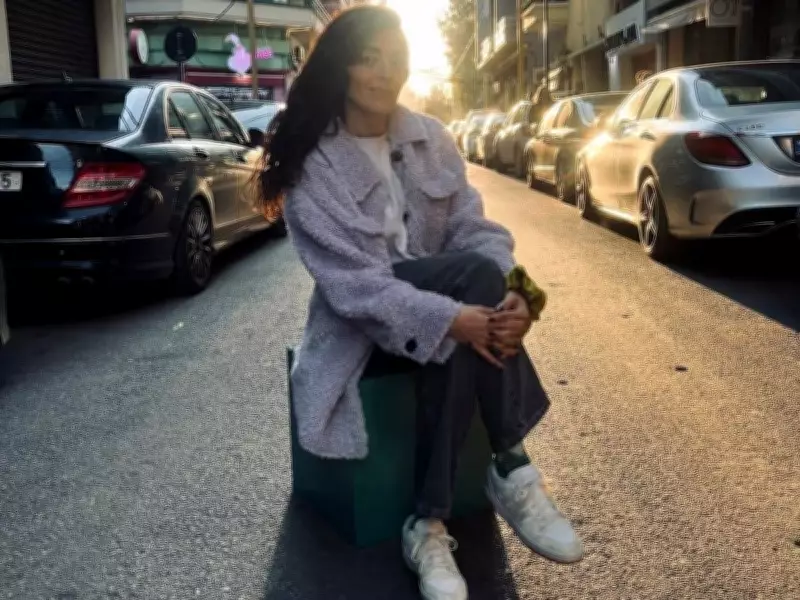
Even as violence tears through Lebanon with increasing intensity, Cynthia Kozah feels she cannot abandon the country she now calls home. Born to Lebanese immigrants in Montreal, where she spent most of her youth, Kozah moved to Lebanon in 2008 and has built a life there working in the television and music industries.
The Sound of War Becomes Normal
"You see and you hear all of the bombs all of the time," Kozah said. "It's become normal." This normalization of conflict comes as Lebanon finds itself caught in the crossfire of regional warfare that has erupted across the Middle East. Following the start of the U.S.-Israeli war on Iran on February 28, Israel launched attacks on Iran-aligned Hezbollah militants, dropping bombs on Lebanese territory and sending ground troops across the border for the first time since 2024.
The broader Middle East conflict has resulted in devastating casualties, with officials reporting more than 1,300 deaths in Iran alone, plus scores of additional fatalities across the region. Despite this dangerous environment, Kozah has made the conscious decision to remain in Lebanon rather than return to the safety of Canada.

Living Between Relative Safety and Constant Danger
Kozah divides her time between the northern city of Awkar—considered relatively safe due to its distance from Israeli attacks in southern Lebanon—and the capital city of Beirut, where bombing occurs more frequently. In Beirut, she has witnessed firsthand the human cost of the conflict, seeing people displaced by Israeli attacks sleeping in the streets. Some of these displaced individuals have received assistance from Kozah at the soup kitchen where she volunteers.
When asked why she chooses to stay in such a dangerous environment, Kozah admits, "I don't have a rational answer. I think I have a toxic relationship with Beirut. The more it suffers, the more I have this need to be by its side and to try to save it somehow, even though I can't. I feel so much better and so much more at peace being in the city and helping."
Family Concerns and Personal Convictions
Her decision has created understandable concern among her family members. Kozah's parents remain in Montreal, and much of her extended family lives across Canada. Explaining her choice to stay in Lebanon has proven challenging. "In 2024, when the war started, they completely lost it on me," she recalled. "They couldn't understand what was happening and why I was still insisting on staying. But this time, they've been much more understanding somehow."
The concern extends beyond Kozah's personal safety to include that of her 11-year-old daughter, who remains with her in Lebanon. "I get a lot of backlash for deciding to keep her in such an unsafe environment," Kozah acknowledged. "But I want her to know about what's happening and I want her to be more human... to understand what really matters."
A Contrasting Experience: Returning to Safety
Chrystel Sfeir, born in Lebanon but now living in Montreal, represents the opposite experience. She found herself in Lebanon visiting her ill father when the war began. From her parents' home in the mountains, she could hear explosions in the distance. Her scheduled Air France flight for March 3 was cancelled, leaving her stranded without a clear route home.
"I didn't know if I would be able to come back to my kids and my family," Sfeir said. Fortunately, an Air France agent secured her a flight with Middle East Airlines on March 5. The journey to the airport proved harrowing. "When I was crossing the bridge to arrive at the airport, they bombed in front of me," she described. "I could see the black smoke."
Now safely back in Montreal, Sfeir experiences conflicting emotions. "I feel guilty for waking up in a peaceful country," she admitted. With all her relatives except immediate family still in Lebanon, she maintains constant contact through a WhatsApp group chat. "You can't live a normal life here because there, your family and your country are in danger," Sfeir explained. "You're torn between here and there."

Uncertain Future and Human Cost
For those remaining in Lebanon, uncertainty prevails. "At this point, we have no idea what's going to happen," Kozah said. "Some people keep saying it's going to take a week or two. Other people say it's going to take months and months." She describes the current conflict as "bigger and scarier than the one we had back in 2024, which was already very scary. It's very random where they're throwing bombs."
Kozah feels Lebanon has become trapped in a larger geopolitical struggle. "We're stuck in the middle of the larger conflict between the U.S., Israel and Hezbollah," she observed. Her perspective transcends political and religious divisions: "I don't care about politicians and I don't care about religion. I just want us to live together and trust each other."
The psychological toll of living in a war zone manifests in a suspended existence. "We're on standby," Kozah explained. "When the war stops, we go back to our lives. And when the war starts again, we stop everything. We stop breathing. We stop dreaming."
Despite the danger, the uncertainty, and the concern from loved ones abroad, Cynthia Kozah remains committed to her adopted homeland, finding purpose in helping those affected by a conflict that shows no signs of abating.