Former Mayor Warns: Quick Fix for Hampstead's Ellerdale Road Could Waste $990,000
Former Hampstead mayor Bill Steinberg has raised serious concerns about the planned $990,000 repaving of Ellerdale Road, questioning whether this substantial investment will ultimately prove to be money wasted. In a letter published by the Montreal Gazette, Steinberg draws on his experience from his tenure as mayor, which began in 2005, to highlight the critical lessons learned from the successful reconstruction of Fleet Avenue.
The Fleet Avenue Precedent: A Lesson in Lasting Infrastructure
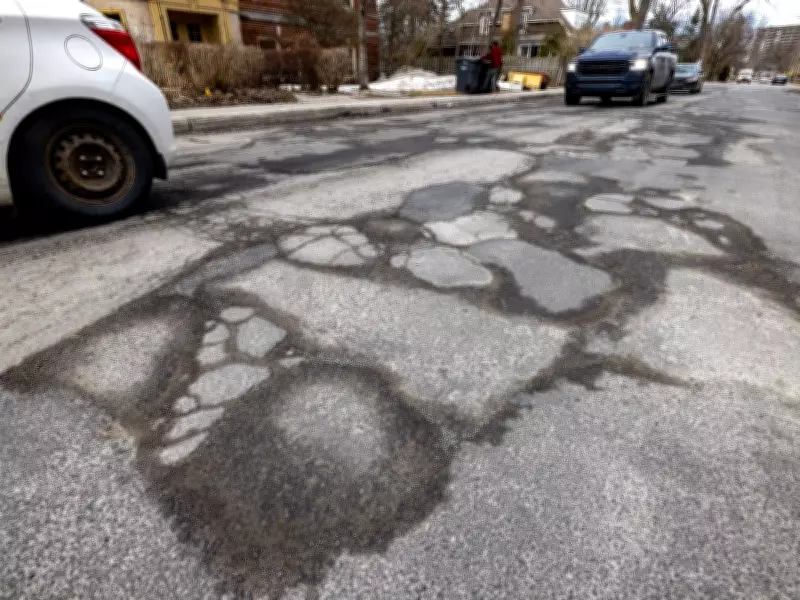
Steinberg recalls that when he first took office, Fleet Avenue was the worst road in Hampstead, with residents complaining incessantly about their houses shaking whenever buses or trucks passed by. The road was being resurfaced every few years, but the potholes kept returning, creating a cycle of temporary fixes and ongoing frustration.
"Two decades later, Fleet is still in excellent condition," Steinberg notes, emphasizing that the same outcome could be achieved for Ellerdale Road if the same comprehensive approach is taken. However, he expresses regret that the current administration's plan for Ellerdale does not follow this proven model.

The Geological Challenge: Clay Soil and Concrete Bases
The core of the issue lies in Hampstead's unique geological makeup. The town is built on clay soil, which is inherently unstable. Both Fleet Avenue and Ellerdale Road were constructed with a concrete slab as a base, covered with layers of gravel and asphalt. While this technique works well in many locations, it is fundamentally unsuited to Hampstead's conditions.
When a concrete base is not built on a solid surface, the clay soil below settles over time, creating significant cavities. The concrete slab then acts like a drum surface, amplifying vibrations from traffic, which leads to cracks and potholes. This explains why mere resurfacing efforts on Fleet Avenue failed repeatedly until the underlying problem was addressed.
The Proven Solution: Digging Deep for Durability
For Fleet Avenue, the successful solution involved digging up the road entirely and destroying the underlying concrete base. The road was then rebuilt with layers of gravel, followed by high-quality asphalt. This method ensured long-term stability and durability, eliminating the recurring pothole problem.
Steinberg warns that if Hampstead proceeds with its current plan for Ellerdale Road, leaving the concrete base intact and simply repaving the surface, the potholes will reappear within two to three years. "Quality lasts. Quick fixes lead to repeated repairs and cost far more in the long run," he asserts, urging the administration to learn from the Fleet Avenue experience to avoid wasting nearly a million dollars of public funds.
The debate over Ellerdale Road's reconstruction underscores broader issues in municipal infrastructure management, where short-term savings often lead to higher long-term costs. As Hampstead moves forward with this significant project, Steinberg's insights serve as a crucial reminder that investing in thorough, geologically appropriate solutions is essential for sustainable community development.