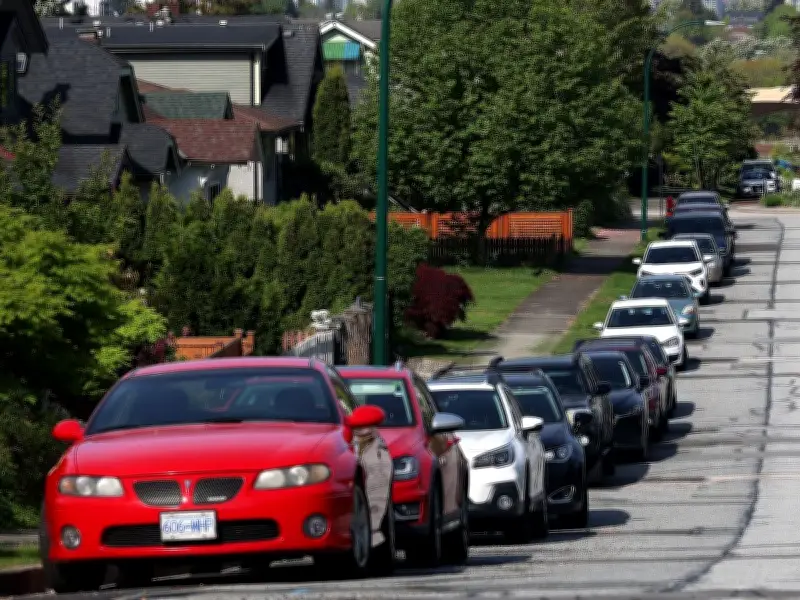
Three new six-unit multiplexes have been built on a residential street in Vancouver, potentially adding 36 more cars competing for limited on-street parking. This development is intensifying existing tensions among neighbours over curb space, as residents already deal with break-ins, hit-and-runs, and confrontations about where to park.
A Polite Request
One resident, Jane Macdougall, described a recent encounter: a new neighbour knocked on her door and politely asked her not to park in front of his house. Macdougall explained that she rarely parks on the street due to multiple break-ins and hit-and-run incidents, and agreed to avoid that spot on the few occasions she does park there. The conversation was brief and genial.
Past Conflicts Over Parking
This is not the first time Macdougall has been asked to move her car. Years earlier, the daughter of a neighbouring house told her bluntly not to park in front of their property. Macdougall protested, noting that the family often has five cars on the street while she has only one, and that legally she can park anywhere. She also pointed out that she has never asked anyone not to park in front of her house.

Break-Ins and Damage
Macdougall’s reluctance to park on the street stems from costly experiences. She woke up one morning to find both car doors wide open, with belongings strewn across her patio. A thief had broken in despite the car being parked practically in her kitchen, aided by motion-sensor lights. Another time, someone popped open the lock with a screwdriver, requiring a new lock and door. A vehicle also clipped her sideview mirror, leaving it dangling like a chandelier earring, and construction trucks frequently drive over her lawn.
These incidents cost thousands in insurance deductibles and led her to use a locked garage and gated driveway. She only parks on the street briefly, under a willow tree, for quick stops.
Impact of Increased Density
With three new six-unit multiplexes on the block, Macdougall predicts parking will become even more contentious. She notes that many households have two or three cars, and the additional 36 vehicles will strain the limited street space. She also warns that thieves will find more opportunities as more cars are left on the street.
According to Macdougall, the situation is likely to escalate: “Yup, it’s going to get interesting. And, for thieves in the night, lucrative.”
Broader Implications
This local conflict reflects a wider challenge in Vancouver as the city pushes for densification to address housing shortages. Multiplexes and other infill developments increase population density without always providing adequate off-street parking, leading to friction among residents. The city does not regulate who can park on residential streets, leaving neighbours to negotiate informally—often with mixed results.
Macdougall’s experiences highlight the need for clearer policies or community agreements to manage shared curb space as density increases. Without such measures, tensions may continue to rise, and street parking could become a persistent source of neighbourhood conflict.