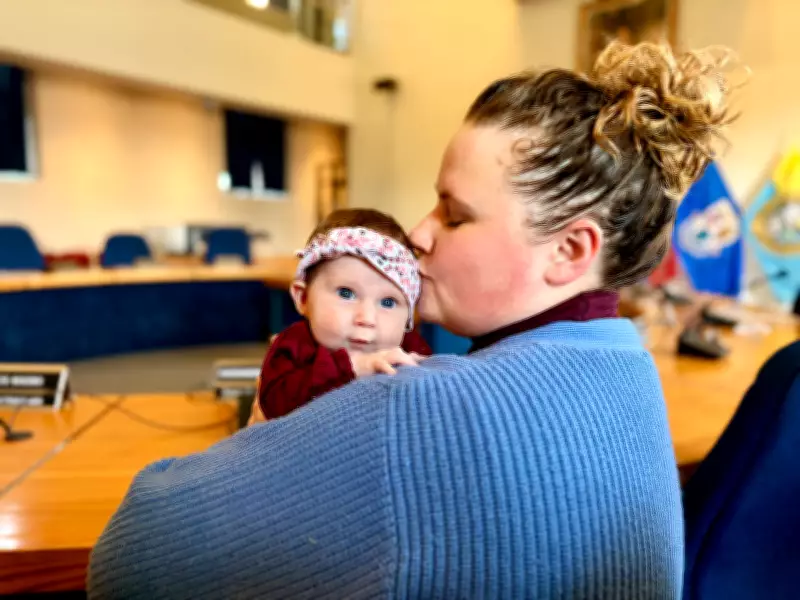
Youngest Attendee at Fredericton City Council Sparks Hope for More Parent Politicians
In a heartwarming display of modern parenting intersecting with public service, Fredericton, New Brunswick City Councillor Cassandra LeBlanc recently brought her 7-week-old daughter to a council meeting, making the infant the youngest attendee in recent memory. This simple act has ignited a broader conversation about encouraging more parents, particularly mothers, to pursue elected office and the importance of accommodating family life in political spheres.
A Symbolic Moment in Municipal Politics
The presence of Councillor LeBlanc's newborn at the city council meeting was not merely a personal choice but a powerful statement on inclusivity and support for working parents in leadership roles. As the infant rested quietly during proceedings, the scene underscored the challenges and possibilities of balancing civic duty with early parenthood. This event has been widely praised as a positive step toward normalizing family responsibilities within governmental settings, potentially reducing barriers for parents considering political careers.
Inspiring a New Generation of Candidates
Observers and advocates note that such visible examples can significantly impact political participation. By demonstrating that parenting and public service are not mutually exclusive, LeBlanc's actions may encourage other parents to run for office, diversifying the perspectives and experiences represented in local government. This is particularly relevant for women, who often face disproportionate challenges in entering politics due to caregiving responsibilities. The incident has sparked hope that more municipalities will adopt family-friendly policies, such as flexible meeting schedules or on-site childcare, to support elected officials with young children.

Broader Implications for Work-Life Balance in Politics
The discussion extends beyond Fredericton, touching on national trends in political engagement and representation. As cities across Canada grapple with issues like affordable housing, healthcare, and education, having parents in office can provide firsthand insights into family-centric policies. LeBlanc's move highlights a growing demand for political environments that accommodate diverse life stages, potentially leading to more empathetic and effective governance. It also raises questions about how institutions can better support all caregivers, ensuring that public service is accessible to everyone, regardless of family status.
Ultimately, this small but significant moment in Fredericton serves as a reminder that progress often comes from simple acts of inclusion. As more parents see themselves reflected in positions of power, the hope is that local governments will become more representative of the communities they serve, fostering a healthier political landscape for future generations.