Canada's Forgotten Tragedy: How the Air India Bombing Was Ignored
The Air India Flight 182 bombing stands as the most devastating terrorist attack in Canadian history, yet it remains shrouded in national amnesia. This horrific event represents how an entire nation can witness mass murder unfold with indifference, then collectively pretend it never occurred. The failure to prevent the tragedy and the subsequent inability to bring perpetrators to justice reveal deep systemic flaws in Canada's approach to terrorism.
A Preventable Catastrophe
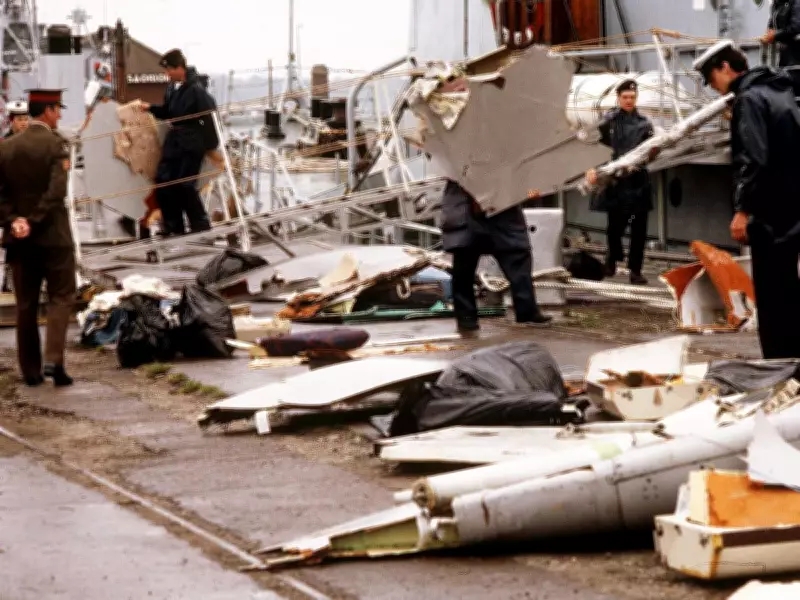
Where can someone slaughter hundreds of innocent people and essentially escape consequences? Shockingly, in Canada, where authorities repeatedly bungled opportunities to stop an obvious terrorist plot targeting Air India Flight 182. The bombing on June 23, 1985, claimed 329 lives aboard the Boeing 747 that crashed into the Atlantic Ocean near Ireland. Despite clear warning signs and surveillance operations, not a single terrorist responsible for this brazen attack has been successfully prosecuted for murder.
This represents the most preventable horror in Canadian history, yet the nation seems eager to forget it ever happened. Even as extremist ideologies continue to brew violence, the lessons from this tragedy remain largely unlearned. The indifference displayed by authorities and the public alike created conditions where terrorists could operate with near impunity.

Missed Opportunities and Surveillance Failures
The story begins on June 4, 1984, in a remote area outside Duncan, British Columbia. Canadian Security Intelligence Service agents were surveilling Talwinder Singh Parmar, a known terror suspect who had immigrated to Canada in 1970 and openly expressed radical views. The CSIS agents witnessed Parmar meet with Inderjit Singh Reyat and detonate an experimental bomb in the wilderness.
Proper counter-terrorism protocol dictates intervention long before suspects reach the testing phase of explosive devices. Authorities should have apprehended perpetrators during planning stages or when acquiring bomb-making materials. Instead, Canadian agents watched as extremists conducted functional bomb tests, demonstrating they possessed both knowledge and capability to execute mass violence.
Warnings Ignored
Months before the Duncan explosion, informants had alerted both the RCMP and Vancouver Police about specific threats. Intelligence indicated that British Columbia-based Sikh extremists, including Parmar, were actively planning to construct a bomb for smuggling into an airliner's cargo hold. These militants supported the Khalistan separatist movement and harbored intense hatred toward the Indian government.
Despite these explicit warnings, Canadian authorities failed to connect the dots or take decisive action. The surveillance operation that witnessed the bomb test should have been the endpoint of the investigation, with immediate arrests following. Instead, it became just another missed opportunity in a series of failures that would culminate in tragedy.
Systemic Indifference and Historical Legacy
The Air India bombing exposes how bureaucratic inertia, racial biases, and political considerations can override public safety. For years, the attack was wrongly perceived as an "Indian problem" rather than a Canadian tragedy, despite occurring on Canadian soil and involving Canadian citizens. This perception contributed to the lack of urgency in both prevention and investigation.
Today, as new generations of extremists emerge, the lessons from 1985 remain critically relevant. The podcast "Canada Did What?" explores this dark chapter with unflinching honesty, examining how indifference allowed terrorism to flourish and justice to be denied. The victims' families continue seeking accountability, while Canada struggles to confront this painful part of its history.
The debris recovered from the Atlantic Ocean serves as a haunting reminder of what happens when warnings go unheeded and systemic failures compound. As the nation moves forward, remembering the Air India bombing becomes not just an act of historical preservation, but a necessary safeguard against future tragedies.