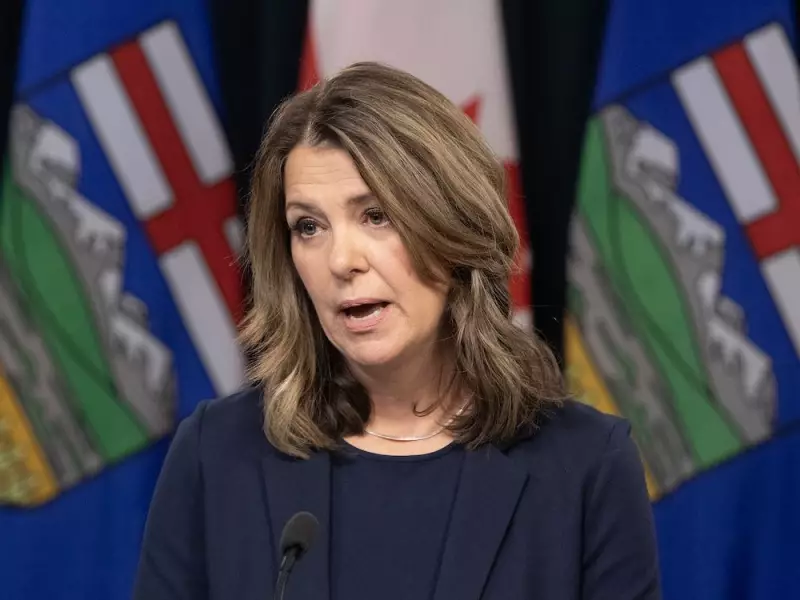
Alberta has taken a decisive step to protect regulated professionals from what the government describes as political overreach by professional regulatory bodies. On Thursday, Premier Danielle Smith and Justice Minister Mickey Amery announced Bill 13, the Regulated Professions Neutrality Act, legislation aimed at curbing the power of professional colleges and associations to mandate ideological training.
New Limits on Regulatory Power
The new legislation directly addresses concerns that professional regulators have been exceeding their mandate by enforcing political and social agendas. The bill specifically prohibits professional bodies from requiring members to undergo diversity, equity, and inclusion (DEI) training, along with other forms of what the government terms "political conditioning."
According to government explanations, the act would ban training that "arbitrarily assigns value or blame based on people's race, colour, ancestry, national or ethnic origin, religious belief, sex, sexual orientation, gender identity, political belief or belief on a matter of conscience." It would also prevent giving people "preferential or adverse treatment based on these categories to achieve diversity, equity or inclusion."

Protecting Professional Speech Rights
The legislation provides significant protections for professionals' off-duty expression, drawing inspiration from controversial cases involving other Canadian professionals. The government specifically referenced the situations of Jordan Peterson and Amy Hamm, both National Post contributors who faced professional discipline for their public statements.
Peterson's clinical psychology credentials were targeted by the College of Psychologists of Ontario after complaints about his online presence, while Hamm was sanctioned by the B.C. College of Nurses and Midwives for critical statements about transgenderism made while publicly identifying as a nurse.
Under the proposed law, most off-duty speech would be protected, with exceptions for specific circumstances including:
- Violent threats
- Abuse of professional status to harm individuals
- Conduct resulting in criminal conviction
- Professional misconduct relating to boundaries and sexual impropriety
- Sexual communication with a minor
Addressing Existing Training Requirements
The legislation comes as professional bodies across Canada have increasingly mandated ideological training. In British Columbia, a lawyer faced denunciation from his law society for pointing out factual inaccuracies in mandatory Indigenous training courses.
In Alberta, all lawyers are currently required to take an anti-colonial course on Indigenous matters that covers land acknowledgements and "two-eyed seeing." One Alberta lawyer attempted to challenge this requirement in court, but his concerns were dismissed by the Court of King's Bench in September.
The new bill would allow some political, social and cultural training only if it directly relates to professional competence and "does not seek to dictate the acceptable range of opinions" regarding politics and history.
While professional culture in Alberta hasn't reached the same level of ideological enforcement as in some other provinces, the government emphasized the importance of preventive measures. The legislation aims to ensure professional regulators focus on ensuring members can perform their jobs competently rather than advancing political agendas.