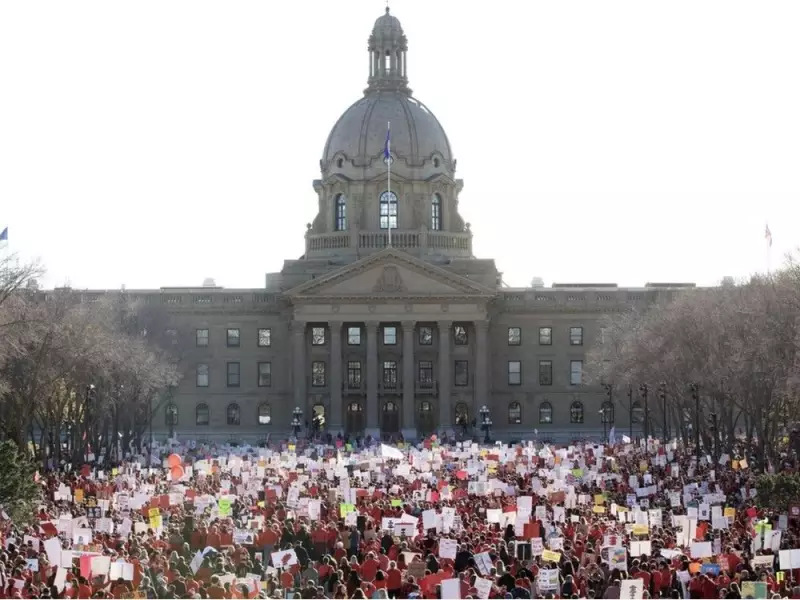
The United Conservative Party government in Alberta is learning a hard lesson about legislative craftsmanship as two of its signature policies generate unexpected political fallout.
Constitutional Power Unleashed
The provincial government's decision to force striking public school teachers back to work while simultaneously imposing a contract has created one of the most contentious political situations in recent Alberta history. The move attracted particular scrutiny for its pre-emptive use of the Constitution's notwithstanding clause, effectively suspending Charter rights to end the labour dispute.
Legal experts and political veterans expressed alarm at the approach, noting the clause was originally conceived as a thoughtfully considered last resort against judicial overreach, not as a fast-tracked legislative tool. The situation escalated when Premier Danielle Smith dismissed concerns about judicial independence, instead criticizing one of the three fundamental pillars of Canadian democracy.

Unintended Consequences Emerge
Meanwhile, the government faces challenges from another quarter entirely. Critics of the administration's handling of the teacher dispute have turned the UCP's own legislation against them, using recall provisions enacted by a previous UCP government to attempt forcing byelections in several ridings, including that of Education Minister Demetrios Nicolaides.
UCP legislators have responded by arguing the recall law was never intended for political disagreements, but rather for removing politicians who committed serious ethical breaches or broke the law. The situation highlights how poorly crafted legislation can create unintended consequences that return to haunt its creators.
Broader Implications for Governance
The dual controversies underscore fundamental questions about legislative responsibility. When courts identify flaws in legislation, the appropriate response should be refinement and improvement rather than attacks on the judiciary. The current situation demonstrates that rushed or poorly considered laws inevitably produce negative outcomes, regardless of the government's initial intentions.
As Alberta's government navigates these self-created challenges, the episodes serve as a stark reminder that governance requires careful consideration of potential consequences and respect for democratic institutions and processes.