B.C. Government Explored Landslide Property Buyouts But Failed to Follow Through
Internal government documents obtained through freedom of information requests reveal that British Columbia officials seriously considered purchasing residential properties that had become worthless due to landslide risks following the devastating 2021 atmospheric rivers. The province ultimately decided against implementing this proposed policy, leaving homeowners with properties valued at virtually nothing and no clear path forward.
Post-Disaster Policy Examination
After the catastrophic November 2021 atmospheric rivers that caused billions in damages, displaced thousands of residents, and triggered widespread flooding, debris flows, and landslides across British Columbia, provincial officials began examining how to assist homeowners whose properties had become unsafe but weren't eligible for existing disaster relief programs. The existing programs typically required structural damage to qualify for assistance, creating a significant gap for properties rendered uninhabitable by landslide risks without actual structural destruction.
The policy discussions involved senior officials from the Ministry of Emergency Management and Climate Readiness, including then-Minister Bowinn Ma, other cabinet ministers, and the office of Premier David Eby. Hundreds of pages of records detail extensive deliberations about creating a solution outside the regular disaster relief framework.

The Proposed Solution That Never Materialized
The province considered a comprehensive approach that would have involved purchasing affected properties and potentially helping relocate houses to safer locations. The proposed policy would have aligned with the United Nations' Sendai Framework on Disaster Risk Reduction, which emphasizes preventing people from remaining in unsafe or uninhabitable homes following natural disasters.
Geotechnical reports identified approximately a dozen homes in areas including the Chilliwack River Valley and Mount Currie east of Pemberton that had become unsafe to occupy due to debris flows and landslides triggered by the 2021 atmospheric rivers. The proposed solution would have included placing restrictive covenants on purchased properties to warn future owners about the risks and limit how the land could be used.
Homeowners Left in Limbo
The disclosure provides little comfort to affected homeowners like Chris Rampersad, whose Chilliwack River Valley property was deemed unsafe and valued at just $2 by provincial property assessors in 2024. Rampersad had been aware that the government was working on some solution but didn't know the specific details until the documents were released.
"I'm not too sure why they didn't follow through with putting the policy in place," Rampersad commented recently. "If government had started working on a policy outside of the existing relief program, it meant it had acknowledged there was a gap in disaster relief in B.C."
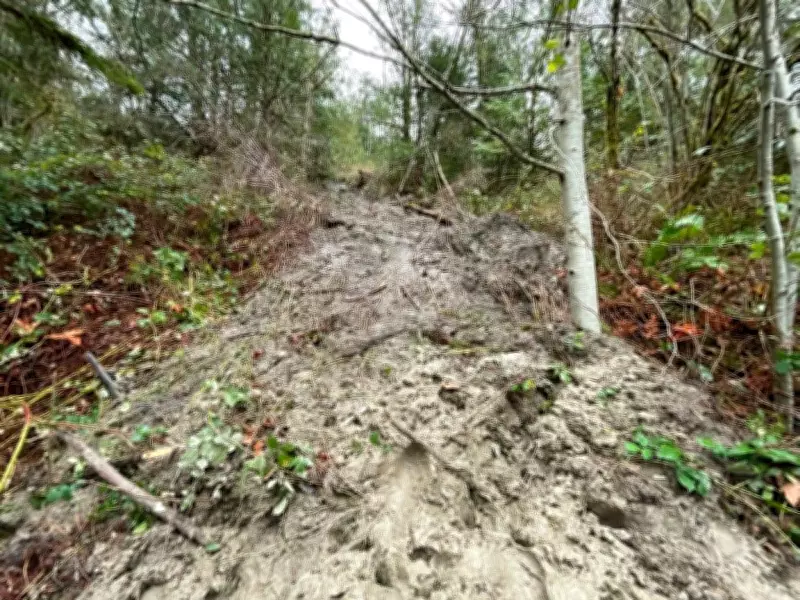
Rampersad continues to pay a mortgage on a property considered worthless and has been told there's no feasible way to fix the landslide problem on his land. In December 2025, heavy rains triggered another landslide on his property, demonstrating the ongoing nature of the threat.
Climate Change Context and Future Risks
The situation highlights broader challenges as climate scientists forecast that atmospheric rivers—massive plumes of moisture transported from tropical storms across the Pacific Ocean—will increase in both severity and frequency due to climate change. These weather phenomena can trigger exactly the type of landslides and debris flows that rendered these properties unsafe.
The policy deliberations occurred against this backdrop of increasing climate-related risks, yet the province ultimately decided not to implement the proposed buyout program. This leaves affected homeowners in a precarious position, with properties they cannot safely occupy, cannot sell at meaningful value, and for which they receive no government assistance.

The documents reveal a significant gap in British Columbia's disaster response framework—one that was identified by government officials but never addressed through policy implementation. As climate-related disasters become more frequent, this case raises important questions about how governments will support residents whose properties become unsafe due to environmental risks rather than structural damage.