Christine Fréchette Ascends to Quebec Premiership Amid Party Challenges
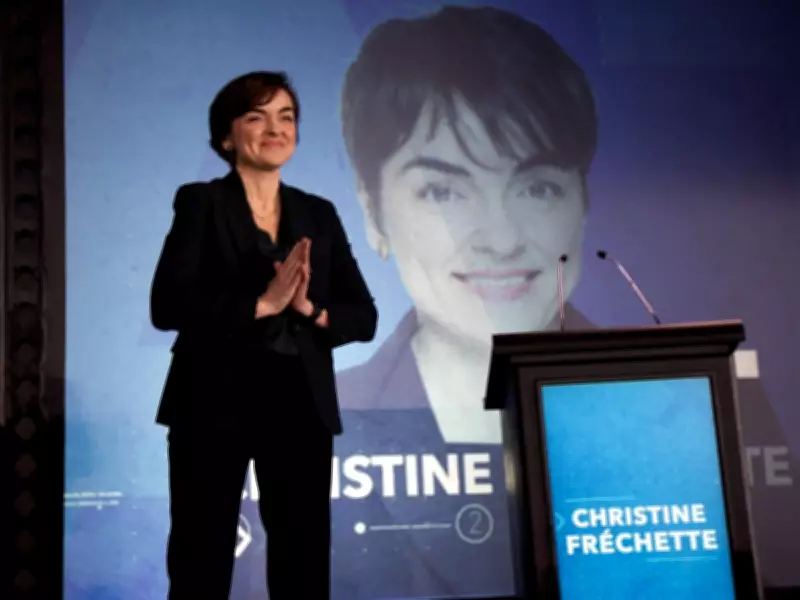
Christine Fréchette has officially become the new leader of the Coalition Avenir Québec (CAQ) and will assume the role of Quebec's premier, marking a significant political transition in the province. This development comes as the CAQ faces substantial electoral challenges, with recent polls showing the party at historically low levels of public support.
A Deliberate Path to Leadership
Fifty-six-year-old Fréchette's rise to leadership follows months of speculation about who might succeed former Premier François Legault. Last fall, Legault acknowledged Fréchette's "extraordinary potential" during an interview, noting that while she lacked his extensive experience in business negotiations, she possessed a remarkable ability to learn quickly. However, Legault stopped short of formally endorsing her as his successor at that time.
Fréchette now becomes the second leader in the CAQ's history, following Legault who founded the party in 2011 and led it through two majority governments since 2018. She also becomes Quebec's second female premier, following Pauline Marois of the Parti Québécois who served from 2012 to 2014.

Navigating Troubled Political Waters
The new premier faces immediate challenges as she prepares to lead a party that has seen its support dwindle significantly. According to Philippe J. Fournier, founder of the polling aggregator website Qc125, a Léger poll conducted before the leadership race concluded showed the CAQ had fallen to just 9 percent in provincial vote intentions—the worst result for the party since its creation.
Quebec's Minister of International Relations Christopher Skeete, who supported Fréchette during the leadership race, acknowledged the difficult polling situation while expressing optimism about her leadership. "Obviously, the polls are not great. They haven't been great for a while, and that's okay," Skeete stated in a recent interview.
A Different Leadership Style
Supporters of Fréchette emphasize her distinct approach to governance. Skeete described her as "deliberately thoughtful" and suggested her leadership style might provide the stability Quebecers seek amid global uncertainty. "Right now, given how crazy the world is, having someone as deliberately thoughtful, I think, is completely the right casting," he explained. "They want someone who's not going to be fireworks for the sake of fireworks, but that can give off fireworks when it's necessary."
Historical Comparisons and Political Realities
Political observers have drawn comparisons between Fréchette's situation and that of former Canadian Prime Minister Kim Campbell, who led the Progressive Conservative Party for just a few months before the party suffered a devastating electoral defeat in 1993. However, Thierry Giasson, a political science professor at Laval University, notes important differences between the two leaders.
"While Campbell was outspoken, blunt and had a sense for drama, people who know Fréchette say she is studious, thoughtful and considers all avenues before coming to a decision," Giasson explained. He added that the CAQ's current predicament might explain why several prominent women within the party chose not to seek the leadership position.
Fréchette has only a few months to establish her leadership before facing an electorate that appears determined to move beyond the CAQ's previous governments. As she prepares to take office, the political landscape presents both significant challenges and opportunities for Quebec's new premier to define her legacy and potentially revitalize her party's fortunes.