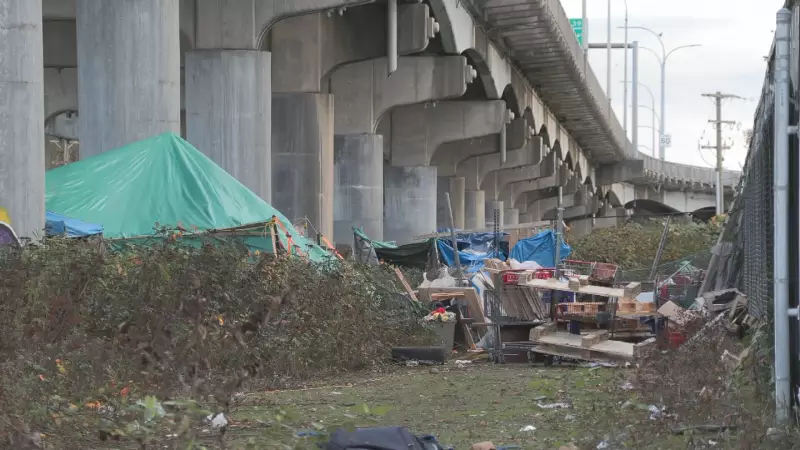
British Columbia's Conservative party is intensifying pressure on the provincial government to address what they describe as a growing crisis at a homeless encampment in Richmond. The political showdown centers on a makeshift community that has developed beneath the Oak Street Bridge, raising concerns about public safety and living conditions.
Political Pressure Mounts
The Conservative opposition has launched a formal campaign demanding immediate action from the BC government to dismantle the encampment. Published on November 19, 2025, their position represents escalating tensions between political factions regarding how to handle homelessness in the region.
Conservative officials argue that the encampment poses significant risks to both residents and the broader community. They point to potential safety hazards, sanitation issues, and what they characterize as deteriorating conditions at the site. The party maintains that allowing the encampment to persist represents a failure of provincial housing policy.

Location and Context
The encampment in question has taken root directly under the Oak Street Bridge in Richmond, a strategic location that provides some shelter from the elements but also presents numerous challenges. The bridge structure has become home to dozens of individuals experiencing homelessness, creating a visible manifestation of the region's affordable housing crisis.
Local residents and business owners have expressed mixed reactions to the encampment's presence. While some acknowledge the humanitarian aspect of the situation, others have raised concerns about property values, neighborhood safety, and the need for permanent solutions rather than temporary encampments.
Broader Implications
This political confrontation occurs against the backdrop of ongoing debates about homelessness strategies throughout British Columbia. The Conservative position reflects a harder line approach to encampments, while the current government has generally favored housing-first strategies combined with supportive services.
The timing of this demand is particularly significant as municipalities across BC grapple with increasing visible homelessness. The Oak Street Bridge encampment has become a flashpoint in the larger discussion about how to balance compassion with community concerns and what role different levels of government should play in addressing these complex social issues.
As the political standoff continues, advocates for homeless individuals warn that simply removing encampments without providing adequate alternative housing could exacerbate the problem rather than solve it. They emphasize that without addressing the root causes of homelessness, people will simply relocate to other visible locations throughout the community.