Edmonton Pioneers Holistic Approach to Wildfire Management with Significant Budget Increase
As wildfire risks escalate across Canada, the City of Edmonton is taking a pioneering step by implementing a comprehensive, holistic wildfire management strategy. City council is currently reviewing proposals to increase the wildfire mitigation budget by up to $11 million over the next four-year budget cycle, marking a significant commitment to protecting urban areas from growing wildfire threats.
A Groundbreaking Municipal Strategy
During a recent community and public services committee meeting, advocates praised Edmonton for becoming one of the first major Canadian municipalities to adopt a holistic approach to wildfire management through its Wildland-Urban Interface (WUI) Wildfire Risk Strategy. Fire Chief David Lazenby emphasized the importance of this initiative, noting that while the city cannot definitively claim to be the first major city to implement such a strategy, it represents a forward-thinking approach to a growing problem.
"This is a good news story," insisted Chief Lazenby, who revealed that Edmonton has dealt with over 2,000 grass fires since 2020. "We can't confirm for sure that we are the first major city to implement WUI strategy, but to the best of our knowledge we are."

Budget Options and Risk Reduction
The committee was presented with three distinct options for addressing wildfire risks in the coming disaster season:
- Maintain the status quo, which would achieve approximately 30% risk reduction with no budget impact
- Step up mitigation work to reduce risk by roughly 65% at an estimated cost of $2 to $6 million
- Implement comprehensive mitigation to address up to 100% of risk at an estimated cost of $8 to $11 million
Committee members voted unanimously to explore the actual costs of the latter two options during council's upcoming four-year budget deliberations, signaling strong support for enhanced wildfire protection measures.
The Growing Wildfire Threat
Climate change has fundamentally altered wildfire patterns in Alberta and across Canada. Edmonton now experiences wildfire seasons that start earlier and last longer than historical norms. Seven of the twelve driest years on record in Edmonton have occurred since 2000, and climate projections indicate the Edmonton-area will become more arid and hotter by 2050.
Nationally, the surface area burned by wildfires has doubled since the 1970s, with projections suggesting this could double or triple again by 2100. The financial impact of these disasters is staggering: the 2016 Fort McMurray wildfire resulted in over $9 billion in insurance losses, while the 2024 Jasper wildfire caused $1.23 billion in insurance claims.
"Wildfire risk is changing and we're changing the map by warming our climate," said Glenn McGillivray, managing director of the Institute for Catastrophic Loss Reduction. McGillivray praised Edmonton's strategy, stating, "You are probably the first major city in Canada to start thinking along these lines."
Edmonton's Specific Vulnerabilities
With over 7,400 hectares of wildland-urban interface, Edmonton faces significant wildfire risks. The primary wildfire corridor is the river valley, but grasslands along major roadways and utility corridors also present substantial danger. Fire behavior in these areas can be unpredictable and rapid, with flames traveling faster uphill as they heat fuel above them.
Contrary to popular images of "walls of flame" from evacuation footage, the predominant method of wildfire spread is through embers that can float through the air, land on flammable structures, and ignite them. This mechanism allows fires to spread with astonishing speed. In 2018, a California wildfire expanded by one football field per second, while during the Paradise fire, flames jumped an entire canyon. Closer to home, the Fort McMurray fire became visible from space within just 15 minutes of starting on the "safe" side of the Athabasca River.
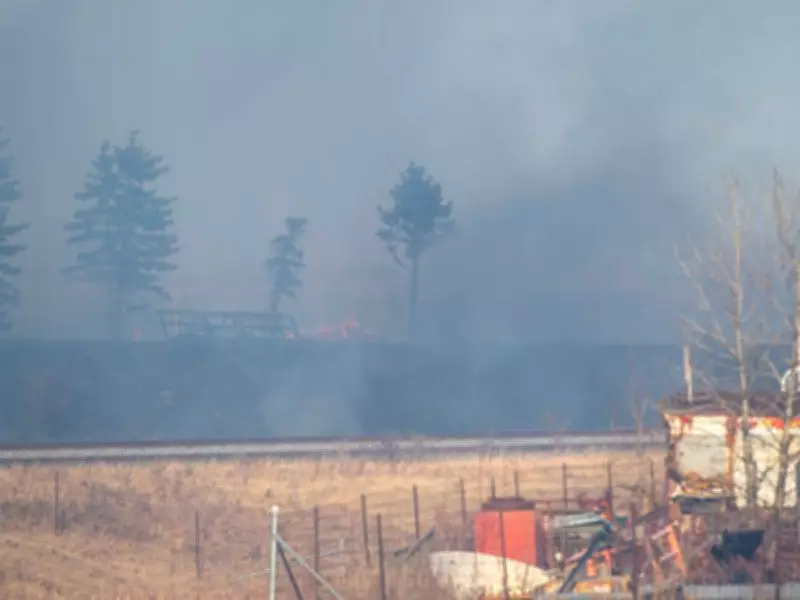
Edmonton experienced its own wildfire scare in 2023 when a grassfire smoked out the Albany neighborhood, serving as a stark reminder of the city's vulnerability to these increasingly common disasters.

A Proactive Approach to Urban Safety
The proposed budget increase and holistic strategy represent Edmonton's commitment to proactive wildfire management rather than reactive response. By addressing risks before they materialize into disasters, the city aims to protect residents, property, and critical infrastructure from the devastating impacts of wildfires that have become more frequent and intense due to climate change.
As council moves forward with budget deliberations, the decision to invest significantly in wildfire mitigation reflects a growing recognition that traditional approaches are no longer sufficient in the face of changing climate conditions and increasing urban-wildland interface areas.