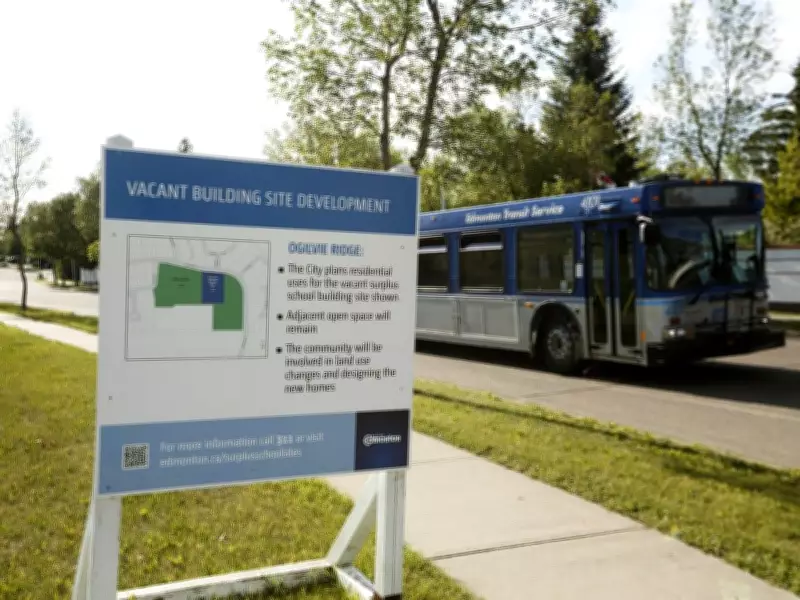
Court Overturns Edmonton's School Site Sales Due to Procedural Violations
A significant judicial ruling has invalidated Edmonton's controversial practice of selling surplus school sites at below-market values, citing procedural unfairness and a denial of residents' legal rights to participate in public hearings. The decision stems from a case involving the Wedgewood Heights site, where the Court of King's Bench determined that city council failed to follow mandatory steps under the Municipal Government Act.
Flawed Process Affects Multiple Communities
The court found that Edmonton city administration led a process recommending sales without holding proper public hearings, instead discussing and voting on matters at council meetings where residents cannot speak. This oversight was not minor; it affected ten other surplus school sites beyond Wedgewood, including Belmont, Blue Quill, Caernarvon, Dunluce, Kiniski Gardens, La Perle, Lymburn, Miller, Overlanders, and Summerlea. These sites have already been sold to housing developers as part of a strategy funded by the federal Housing Accelerator Fund, raising concerns about governance and accountability across the city.
Public hearings are intended to support genuine community participation and informed decision-making, not merely as box-checking exercises. The Municipal Government Act requires councillors to approach such hearings with open minds, prepared to be persuaded by evidence and public input. However, in Wedgewood's case, eight sitting councillors had already voted to sell the land within the past year, and the city entered into a sales agreement with a developer, casting doubt on the fairness of any subsequent hearing.

Broader Implications for Democratic Representation
Equally troubling is the city administration's directive advising Wedgewood's councillor to refrain from engaging with residents while the hearing is pending. This is not a legal requirement and raises serious questions about how elected officials can fulfill their democratic duty to represent constituents. When representation is withheld and positions are pre-determined, public confidence in the process is understandably diminished.
For public participation to carry weight, residents must believe their input can influence outcomes. The current situation exposes broader issues of governance, as errors of this magnitude typically prompt reviews of responsibility and consequences in professional environments. The court's ruling highlights a critical need for transparency and adherence to legal frameworks in municipal decisions affecting community assets.
As Edmonton moves forward, repackaging reports and scheduling new hearings, the fundamental question remains: can residents expect a fair process when decisions appear pre-made, or has meaningful input been reduced to a symbolic exercise? This case serves as a stark reminder of the importance of procedural integrity in upholding democratic values and community trust.