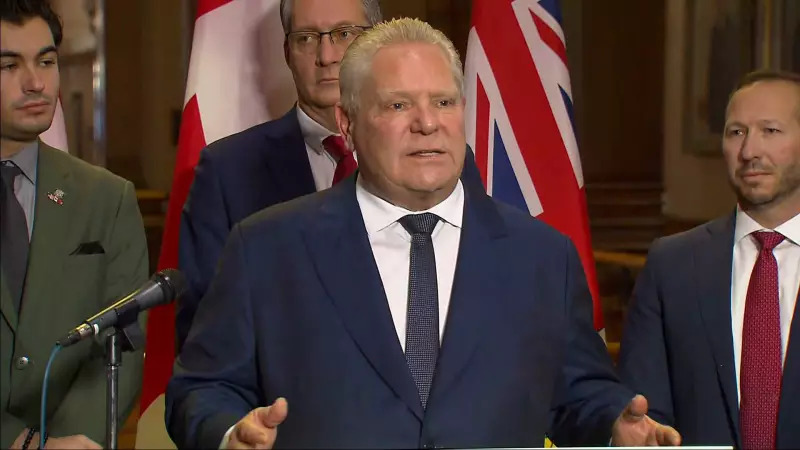
Ontario Premier Doug Ford has drawn a firm line in ongoing negotiations with the City of Toronto, declaring that new municipal revenue tools are categorically off the table. The statement came during a press conference at Queen's Park on January 13, 2026, where Ford was flanked by three visiting state representatives from Michigan.
A Firm Stance Against Further Taxation
Premier Ford's message was unequivocal. "They've taxed us to death in Toronto," he stated, directly addressing the core of the so-called "New Deal 2.0" discussions. These talks aim to redefine the financial and governance relationship between the province and Canada's largest city. Ford emphasized that his government would not entertain proposals for new levies, tolls, or tax authorities that would further burden Toronto's homeowners and businesses.
The context of the announcement extended beyond municipal affairs. The Premier was hosting the Michigan delegation to discuss cross-border issues, including tariffs and the future of the Canada-United States-Mexico Agreement (CUSMA). The international backdrop highlighted the interconnected pressures of local governance and global trade.

Broader Agenda at Queen's Park
The meeting with the U.S. officials also touched on an upcoming engagement with former Bank of Canada Governor Mark Carney. While Ford focused on protecting Ontarians from new taxes, the discussions underscored the province's active role in navigating complex economic relationships. This occurs amid a volatile trade landscape, punctuated by recent provocative comments from south of the border regarding the relevance of continental trade agreements.
Ford's stance signals a significant provincial position as the New Deal 2.0 talks progress. The City of Toronto has long argued for more sustainable, independent revenue sources to fund critical services and infrastructure, moving beyond heavy reliance on property taxes and provincial transfers.
Implications for Toronto's Future
By shutting the door on new revenue tools, the Premier has set a clear boundary for the negotiations. This move is likely to intensify debates over how to address Toronto's well-documented fiscal challenges, which include housing, transit, and social service demands. The city's administration must now explore alternative frameworks or concessions within the limits set by the province.
The announcement at Queen's Park firmly places the issue of municipal taxation and autonomy at the forefront of provincial politics. As the New Deal 2.0 talks continue, all eyes will be on how the city and province navigate this impasse to forge a workable agreement for Toronto's future.