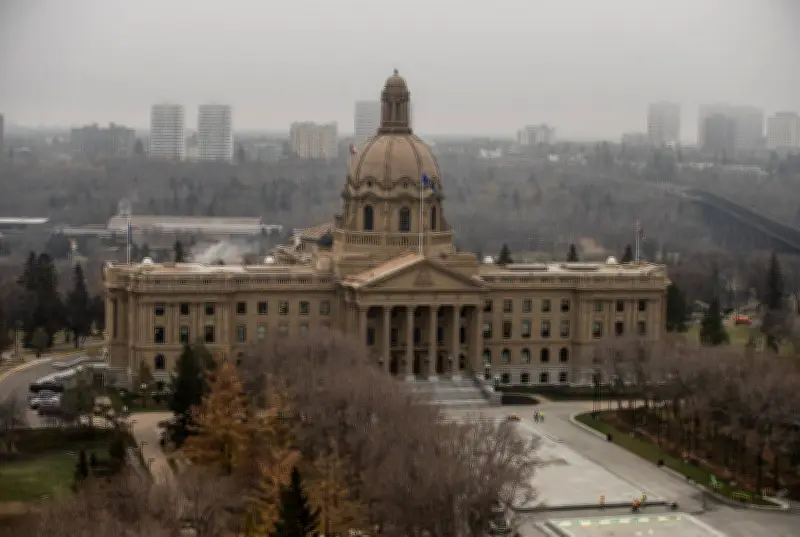
Alberta's governing United Conservative Party has tapped a retired judge to chair the province's new political boundaries panel. The Alberta Legislature is shown in Edmonton on Oct. 31, 2024. THE CANADIAN PRESS/Jason Franson
The Alberta government has appointed a former judge to lead the commission responsible for redrawing provincial electoral boundaries. The United Conservative Party (UCP) announced the selection on Tuesday, marking a key step in the electoral redistribution process required by law after each census.
Background of the Appointee
The retired judge, whose name has not yet been officially released, brings decades of legal experience to the role. Sources indicate that the appointee served on the Alberta Court of Queen's Bench and has a background in constitutional law. The panel will be tasked with ensuring fair representation across the province's 87 electoral districts.

Process and Timeline
The boundaries commission is expected to begin its work in the coming weeks, with public hearings scheduled across Alberta. The panel must submit its final report to the legislature by early 2027. Any changes to electoral boundaries will take effect for the next provincial election, currently slated for 2029.
Opposition parties have raised concerns about the appointment, arguing that the UCP may be attempting to influence the process. NDP critic Sarah Hoffman stated, "This appointment raises questions about the independence of the commission. The government should have chosen a non-partisan figure."
In response, Justice Minister Mickey Amery defended the selection, emphasizing the appointee's impartiality and expertise. "This individual has a stellar reputation for fairness and integrity. We are confident they will conduct the process transparently," Amery said.
Historical Context
Alberta's electoral boundaries have been a contentious issue in recent years. The last redistribution in 2017 led to legal challenges and accusations of gerrymandering. The new commission aims to avoid such controversies by adhering to strict guidelines, including population equality and community of interest considerations.
The Canadian Press reported that the appointment comes as Alberta's population grows rapidly, particularly in urban centers like Calgary and Edmonton. Rural areas have seen slower growth, raising questions about representation balance.
Public input will be crucial in shaping the final map. The commission plans to hold at least 20 public meetings across the province, with virtual options available for remote communities. Indigenous groups and minority populations are expected to be actively consulted.
The panel's work is independent of government interference, though its recommendations must be approved by the legislature. If approved, the new boundaries will be used for the first time in the 2029 provincial election.
Observers note that the outcome could significantly impact the UCP's electoral prospects. The party currently holds a majority, but shifting demographics in key ridings could alter the political landscape.