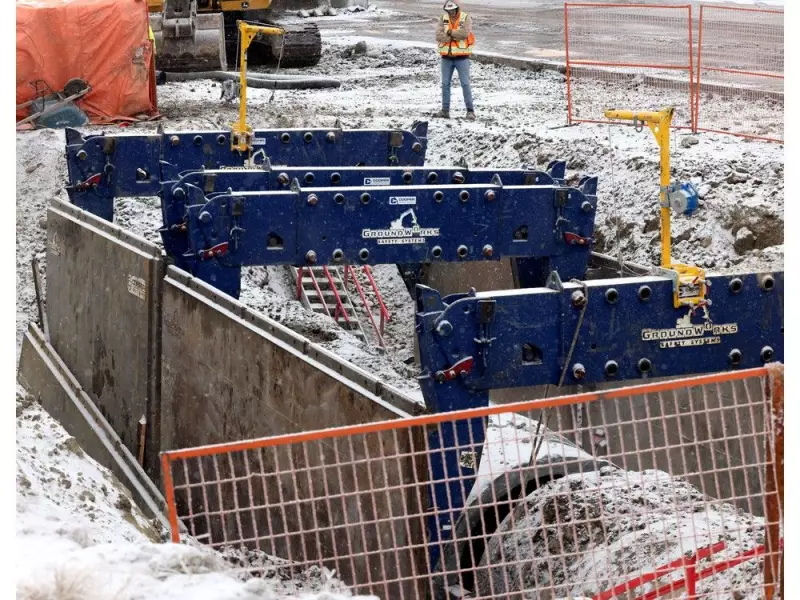
A major water main break in Calgary has ignited a political firestorm, with Alberta Premier Danielle Smith pointing fingers at a former city mayor rather than focusing on immediate solutions. The rupture, which occurred in early January 2026, has highlighted the city's aging infrastructure challenges.
Blame Game Overshadows Infrastructure Crisis
Instead of offering concrete support in the wake of the emergency, Premier Smith's initial reaction was to assign blame to former mayor Naheed Nenshi, who left office over a decade ago in 2013. Critics have lambasted this move as unproductive political theatre, arguing that true crisis leadership requires collaboration, not scapegoating.
The premier's accusation suggests Nenshi should have somehow predicted this specific infrastructure failure from his desk thirteen years prior. This perspective dismisses the complex, real-world factors contributing to such breaks, including aging pipe networks, repeated freeze-thaw cycles, historic flooding, and decades of wear and tear.

Calls for Provincial Takeover Meet Local Resistance
In the aftermath of the blame-shifting, suggestions have emerged from some provincial quarters that the Alberta government should assume control of Calgary's water system. This proposal has been met with skepticism by many Calgarians and local experts.
City engineers and infrastructure professionals, who design, maintain, and operate the system daily, have consistently affirmed that Calgary possesses the necessary expertise to manage its own water assets. The notion of increased provincial micromanagement is not widely seen as the answer to a complex municipal infrastructure issue.
Calgarians Seek Solutions, Not Scapegoats
The core of the public's frustration, as expressed in letters to the editor, is a desire for actionable solutions. Citizens are weary of political point-scoring during a civic emergency. The clear request to the provincial government is for tangible support: funding for critical upgrades and investment in long-overdue infrastructure renewal.
Experts across North America agree that substantial investment is needed to modernize aging urban water systems. If the province genuinely aims to help, aligning with these expert recommendations through financial partnership would be a more productive path than blaming past administrations.
The consensus among frustrated residents is clear: Calgarians need their leaders to fix the pipes, not engage in political performance. The episode serves as a stark reminder that infrastructure decay is a practical problem demanding practical, funded solutions, not a platform for partisan blame.