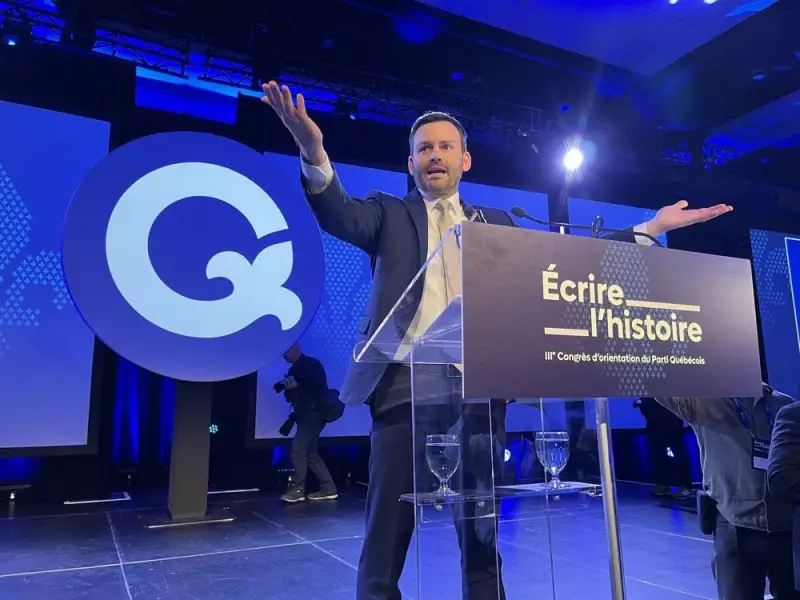
PQ Leader Declares Carney Has Effectively Launched Referendum Campaign
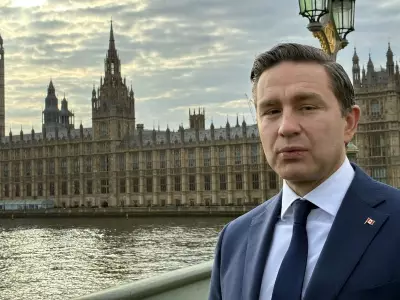
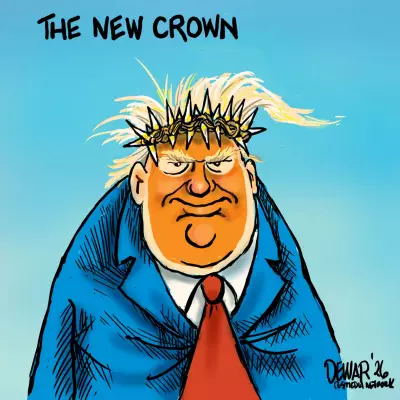
Parti Québécois Leader Paul St-Pierre Plamondon has positioned Prime Minister Mark Carney as "leader of the No side" in what he describes as an effectively launched referendum campaign, following controversial remarks about Quebec's historic Plains of Abraham.
Convention Wraps with Sharp Critique of Prime Minister
The PQ leader delivered his pointed assessment during the closing session of a weekend policy convention in St-Hyacinthe, where party faithful gathered to strategize for the upcoming election battle and eventual sovereignty push. St-Pierre Plamondon focused his half-hour address exclusively on Carney's Thursday comments describing the Plains of Abraham—where British forces defeated the French in 1759—as a place of "accommodation" and "partnership."
"With those remarks, Mark Carney decided to launch the referendum campaign," St-Pierre Plamondon declared to supporters. He later told reporters that "in a certain sense" he has now launched the Yes side of a prospective independence referendum in response to Carney's statements.

Historical Interpretation Sparks Political Firestorm
The PQ leader's critique extended beyond Carney's specific comments to challenge the prime minister's broader understanding of Quebec history. Both St-Pierre Plamondon and Bloc Québécois Leader Yves-François Blanchet—who addressed the convention Saturday—ridiculed Carney's characterization of post-battle relations as partnership, pointing to subsequent historical events including:
- The deportation of Acadians following British victory
- Hangings of Métis resistance fighters
- Implementation of the 1982 Constitution Act without Quebec's signature
"I think that Mark Carney is a smart man who is part of a long line of colonialists," St-Pierre Plamondon asserted, emphasizing what he characterized as a pattern of historical misunderstanding.
Policy Convention Sets Stage for Election and Sovereignty Push
The weekend gathering served dual purposes: preparing for this year's provincial election and laying groundwork for the PQ's promised independence referendum in a first mandate. Party officials reported strong momentum, with:
- Approximately 1,400 attendees at the convention
- Nearly $920,000 raised in 2025 according to Journal de Québec reports
- Hundreds of applications from prospective PQ candidates
Party president Jerry Beaudoin told delegates "We're attracting crowds" as the organization builds toward the next electoral contest.
Policy Framework Emerges from Convention Deliberations
Delegates approved a comprehensive policy document that will inform—though not dictate—the party's election platform. Key measures include:
Language Policy Expansion: The framework calls for extending Charter of the French Language application to CEGEPs and vocational schools, encouraging English high school graduates to attend French CEGEPs, reserving corporate subsidies for language law-compliant companies, and removing bilingual status from municipalities with anglophone populations below 33 percent.
Educational Reforms: Delegates voted to create a mandatory CEGEP course on Quebec history, with one delegate suggesting removing English courses if necessary to accommodate the new requirement.
Electoral System Changes: The document advocates for a voting system incorporating proportional representation and proposes studying lowering the voting age to 16.
Social and Economic Measures: Additional proposals include a Quebec-wide transit pass to reduce public transport costs, funding for non-market housing, revisiting doctors' compensation models, and reducing immigration levels to align with Quebec's population share of Canada.

Grassroots Enthusiasm Reflects Renewed Sovereignty Momentum
Longtime PQ members detected resurgent energy for the independence movement. Georges Bolduc, a member since the party's 1968 founding, observed "the same enthusiasm" that characterized the early years under René Lévesque. Younger delegates like 22-year-old Amin Ouazragh-Marchand from Laval expressed support for the referendum promise, noting that while independence "isn't a solution to all our problems," it would provide "all the means to solve those problems."
As the convention concluded, St-Pierre Plamondon framed the coming electoral battle as encompassing both sovereignty questions and practical governance issues, stating that voters will consider "whether we should become a country or not" alongside "quality of the team" and policy proposals across various subject areas.