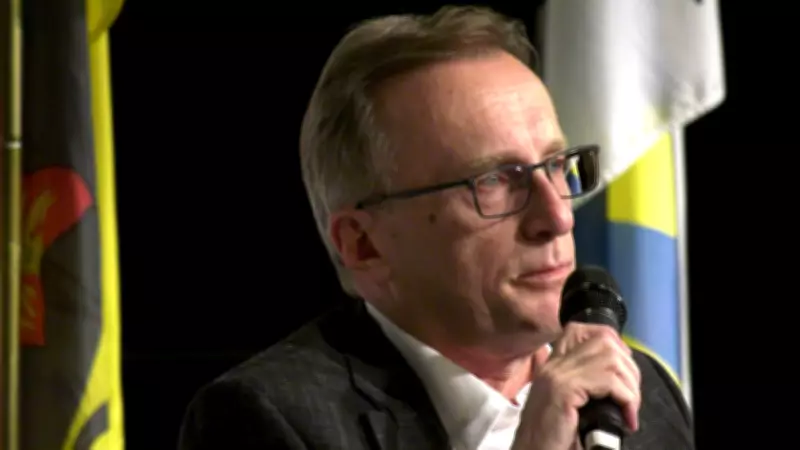
Saskatchewan Finance Minister Reiter Denies Province is Downloading Responsibilities to Cities
Saskatchewan Minister of Finance Jim Reiter has firmly rejected allegations that the provincial government is offloading financial responsibilities onto municipalities, labeling such claims as "further from the truth." The minister made these remarks during a post-provincial budget luncheon hosted by the Regina and District Chamber of Commerce on March 19, 2026.
Addressing Municipal Concerns
In his speech, Reiter emphasized the province's commitment to supporting cities and towns across Saskatchewan. He highlighted that the recent provincial budget includes measures aimed at bolstering municipal infrastructure and services, rather than diminishing provincial support. "We are working collaboratively with our municipal partners to ensure sustainable funding and shared responsibilities," Reiter stated, addressing concerns that have been raised by some local officials.
Budget Highlights and Fiscal Strategy
The finance minister outlined key aspects of the provincial budget, which was unveiled earlier this year. He pointed to increased allocations for public safety, healthcare, and education as evidence of the government's dedication to provincial-led initiatives. Reiter also noted that the budget incorporates feedback from municipal leaders to better align provincial and local priorities. "Our fiscal strategy is designed to foster growth at all levels, not to shift burdens unfairly," he explained.

Reactions from Municipal Stakeholders
While Reiter's comments aimed to reassure municipal representatives, some attendees expressed lingering concerns about funding gaps and rising costs. The luncheon provided a platform for dialogue, with chamber members questioning the minister on specific budget items and their implications for local economies. Reiter acknowledged these challenges but reiterated the province's role in providing stable and predictable funding streams.
Broader Context and Future Outlook
This discussion occurs against a backdrop of ongoing debates about federal-provincial-municipal relations in Canada, where cities often grapple with limited revenue tools and increasing service demands. Reiter concluded by affirming Saskatchewan's approach to intergovernmental cooperation, stressing that the province will continue to engage with municipalities to address shared issues. "We are all in this together, and our goal is to build a stronger Saskatchewan for everyone," he said.