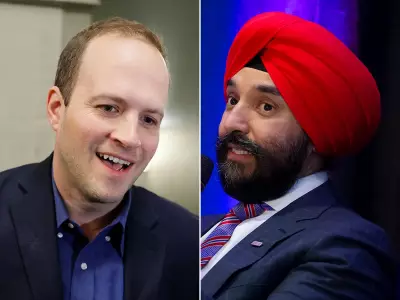
Sheldon Clare, the Member of the Legislative Assembly for a northern British Columbia riding, has officially thrown his hat into the ring for the leadership of the provincial Conservative Party. The announcement, made public on January 08, 2026, sets the stage for a contest that could reshape the party's direction ahead of the next provincial election.
A Northern Voice Enters the Fray
Clare, who represents a northern constituency, brings a regional perspective to the leadership race. His decision to run signals an intent to broaden the party's appeal beyond its traditional bases and address issues critical to communities outside the Lower Mainland. As an incumbent MLA, Clare enters the race with a legislative track record and established name recognition within the party's caucus.
The leadership contest comes at a pivotal time for the B.C. Conservatives as they seek to position themselves as a viable alternative to the governing NDP and the official opposition BC United. The party's logo, a familiar symbol in provincial politics, will be carried by the winner into the next electoral battle.

Political Context and Upcoming Challenges
The announcement was disseminated by The Canadian Press and arrives amidst a busy national news cycle. However, within B.C.'s political sphere, Clare's candidacy is a significant development. The leadership race will involve courting party members, presenting a policy platform, and uniting various factions under a common banner.
Key issues for the next leader will likely include economic concerns, resource development in regions like the North, healthcare, and housing. Clare's platform will be scrutinized for its stance on these matters and its potential to attract a diverse coalition of voters across the province.
The process to select a new leader will follow the party's constitution and involve a vote by its membership. No other candidates have been formally announced alongside Clare at this initial stage, but the field is expected to grow as the race progresses. The outcome will have lasting implications for the conservative movement in British Columbia.