John Ivison: The U.S. ambassador blurts out Donald Trump’s bluff. The message from the U.S. ambassador in Ottawa seems to be that Canadians should ignore whatever comes out of the White House.
A Diplomatic Misstep
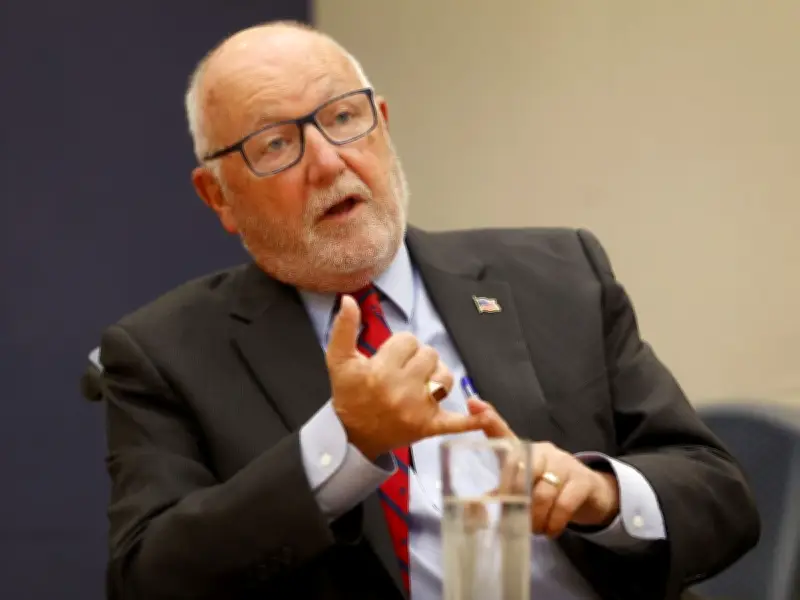
Pete Hoekstra is not quite in the super league of undiplomatic diplomats. Before he was British foreign minister, Boris Johnson once offended the entire nation of Papua New Guinea by linking it to cannibalism. But the current U.S. ambassador can claim the rare accomplishment of uniting Canadians coast to coast in their animosity toward him.
At the Eurasia Group’s Canada-U.S. summit in Toronto on Thursday, he added to his bulging file of diplomatic faux pas when he told his audience that there’s a state in the U.S. (Kentucky) that produces “awesome” bourbon that has been pulled off the shelves in much of Canada. “If you need some, send me your order,” he said, providing his email address, “and I’ll see that you get some.”

It is a measure of how unsuited he is to his task that he expected to get a laugh. When he didn’t, he proceeded to insult his host nation. “I do know Canadians don’t have much of a sense of humour,” he said.
Insights from Unfiltered Thinking
Hoekstra’s saving grace may be that he is aware of his insensibility. He was later asked what he has learned as ambassador to Canada and said he is aware that “the message I’m trying to send is not necessarily the message you are receiving.” On occasions though, his unfiltered thinking can be valuable in trying to understand what the Americans really mean.
In a press conference in the Oval Office on Wednesday, President Donald Trump said that the U.S. does not need anything that Canada or Mexico has to offer. It was quickly pointed out online that the U.S. receives about one-quarter of its net crude input from Canada, without which 11 refineries would be unable to operate. In addition, it gets 85 per cent of its potash, half its aluminum, and one-third of its uranium and softwood lumber.
Interpreting the President
Hoekstra was asked about those comments and provided a useful interpretation of what the president really meant. He conceded that he’d just had breakfast with an executive from Nutrien, the Saskatoon-based fertilizer company, and “I guess we need potash.” But Trump is a “business guy,” the ambassador said.
“When he talks about this — that we don’t need cars from Ontario, and Canadians say: ‘How can you say this?’ — it’s because we can get them from Japan or Mexico or South Korea. But, if Canada puts on its sales hat, they can make a compelling case that if America needs a single car coming in from somewhere else in the world, the best place to get that car from is Canada. It’s the same thing on oil. Maybe you don’t like the way the president says it but take it on the tone of what he is saying, (which is): ‘We’re open to offers; make your case’.”
Surprisingly Upbeat Outlook
The Mr. Bean of ambassadors may have blundered his way through a series of petty, sometimes malevolent, diplomatic incidents, but on Thursday, he was surprisingly cordial and upbeat about the prospects for Canada-U.S. relations. He said he views Canada as a partner with which the U.S. can expand a number of business sectors, including steel and aluminum, defence and “even autos.” This, despite Trump saying: “We don’t want cars from Canada.”