Windsor-Essex Residents Stage Protest at MPP's Office Over Provincial Policies
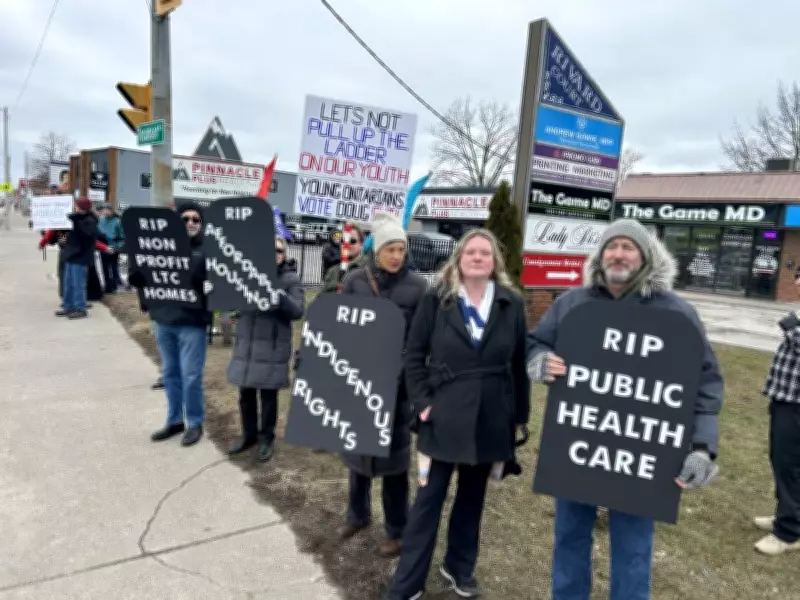
On Saturday, February 21, 2026, approximately twenty individuals assembled outside the constituency office of MPP Andrew Dowie, who represents Windsor-Tecumseh for the Progressive Conservative Party. The demonstration was part of a broader provincial movement dubbed "Fire Ford February," organized to voice opposition to a range of policies enacted by Premier Doug Ford's government.
Symbolic Gravestones Highlight Concerns
Protesters carried hand-crafted tombstones inscribed with RIP messages, symbolizing what they described as the demise of key Ontario institutions under the current administration. Randy Emerson, representing the Windsor-Essex Chapter of the Council of Canadians, detailed the specific areas of concern. These included public healthcare, affordable housing, the Essex Region Conservation Authority, Indigenous rights, non-profit long-term care facilities, green energy initiatives, grocery affordability, and the Ontario Science Centre.
Margaret Gabor, also from the local Council of Canadians chapter, emphasized the symbolism, stating the RIP signs represent "Doug Ford's death toll" for these vital services and institutions.

Criticism of Healthcare Privatization
A primary focus of the protest was the government's healthcare strategy. Emerson criticized the move toward expanding private healthcare clinics, questioning why resources aren't being directed to bolster the public system instead. "Why can't you hire more nurses... instead of a private system taking the nurses away from the public system?" he asked. "Why can't you put more money in the public system?"
This criticism follows the provincial announcement last year licensing four private orthopedic surgical centres, projected to perform 20,000 additional surgeries over two years, with one such clinic slated for Windsor. Gabor warned this approach risks creating a "two-tiered system," asserting that "the privatization is bad. Nobody asked him for that."
Economic and Cost-of-Living Grievances
The protest also addressed economic policies. Emerson challenged the government's stance on grocery prices, referencing Manitoba Premier Wab Kinew's decision to freeze the retail price of some milk for the remainder of 2026. "They say that you can't do anything about groceries because of costs. It's a federal thing," Emerson said, contrasting it with the Manitoba action. He characterized Premier Ford as presenting himself as a "folksy guy" who wants to help, but argued his policies tell a different story.
This sentiment aligns with broader concerns about the cost of living, a theme echoed in recent student protests calling for tuition cost controls.
Government's Fiscal Perspective
In defense of its budgetary approach, Ontario Finance Minister Peter Bethlenfalvy commented last month on the sustainability of health-care spending. He noted that approximately 85% of provincial spending is directed toward social issues, with only about 15% allocated to infrastructure and economic development, implying difficult fiscal trade-offs.
A Unifying Discontent
Despite the diverse range of issues—from environmental conservation to Indigenous rights—protesters found common ground in their disapproval of the Ford government's direction. Gabor summarized the collective sentiment: "There are a lot of different issues that people are experiencing, and we come from different walks of life but all of us have a common denominator here, which is Doug Ford."
The Windsor demonstration, captured in photographs showing protesters with symbolic gravestones and a Grim Reaper figure, reflects ongoing political tensions in Ontario as residents mobilize to challenge provincial policy directions on multiple fronts.