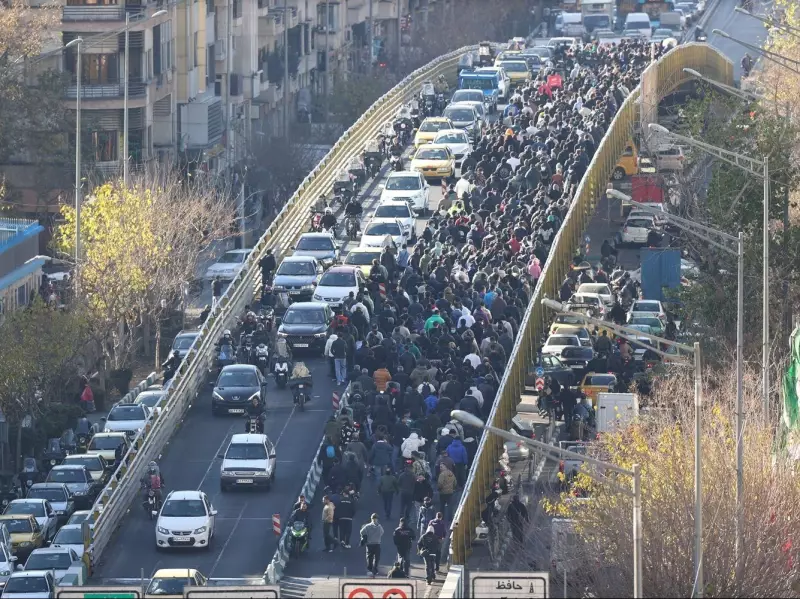
Protests over Iran's crippled economy have intensified and spread beyond the capital, resulting in at least six fatalities as demonstrations entered a fifth consecutive day. The unrest, which began with shopkeepers and merchants, has now reached rural provinces, marking a significant escalation in public dissent.
Protests Ignite Over Economic Despair
The initial rallies were sparked on Sunday, December 29, 2025, by shopkeepers and merchants protesting against soaring inflation, rampant unemployment, and the sharp depreciation of Iran's currency, the rial. The economic situation has become so dire that, according to reports this week, one U.S. dollar was worth more than 1.4 million rial.
What began as a merchant-led movement quickly gained momentum, with students and the wider public joining to voice their displeasure. By Thursday, January 1, 2026, security forces and protesters disclosed the first confirmed deaths, with the toll reaching at least six people. The protests have expanded from Tehran to include cities such as Marvdasht, Kermanshah, Delfan, Arak, and Lordegan.

Government Response and Nationwide Shutdown
In response to the growing unrest, Iranian authorities imposed a nationwide shutdown on Wednesday, closing businesses, universities, and government offices. The civilian government, led by President Masoud Pezeshkian, has signalled a willingness to negotiate with protesters and has offered to hold talks with merchant and trade union representatives over their "legitimate demands."
However, analysts express concern that the reported deaths may trigger a heavy-handed response from Iran's theocratic regime, overseen by Supreme Leader Ayatollah Ali Khamenei. President Pezeshkian has publicly acknowledged the limitations of his power, citing crippling international sanctions and the repercussions of a 12-day war with Israel last year, which led to U.S. strikes on Iranian nuclear facilities.
Intensifying Unrest in Rural Provinces
While protests have reportedly slowed in Tehran, the most intense violence has shifted to rural areas. Significant clashes were reported in Lorestan province, particularly in the city of Azna, located approximately 300 kilometres southwest of the capital. Videos from the area appear to show objects set ablaze and the sound of gunfire, with crowds chanting "Shameless!"
Further south, in Lordegan within the Chaharmahal and Bakhtiari province, videos show protesters gathering on streets with gunfire audible in the background. This city has a history of unrest; in 2019, it saw widespread protests and damage to government buildings after people were allegedly infected with HIV from contaminated needles at a local clinic.
Maryam Rajavi, the president-elect of the France-based National Council of Resistance of Iran, declared in a statement that "the regime must go." She characterized the uprising as a signal of the Iranian people's determination to overthrow what she called a "religious tyranny."
These protests represent the largest wave of demonstrations in Iran since the 2022 nationwide unrest triggered by the death of Mahsa Amini in police custody. However, current observers note that the ongoing protests have not yet reached the same countrywide intensity as those earlier rallies.