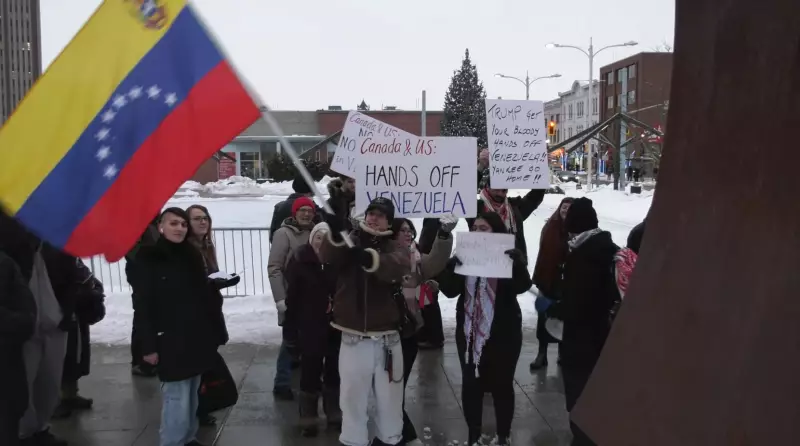
A public rally held in Waterloo, Ontario, on January 6, 2026, revealed a stark divide among local residents in the wake of a major international event. The gathering was organized in response to the recent capture of Venezuela's president, an incident that has sparked global debate and now, local controversy.
Community Voices Clash on Foreign Policy
The event, covered by journalist Spencer Turcotte, saw community members express sharply opposing viewpoints. While some attendees voiced strong support for the actions leading to the Venezuelan leader's detention, others condemned it as foreign overreach. This split mirrors a similar demonstration reported in Regina, where residents held a rally specifically to oppose potential U.S. military action in the South American nation.
The local reaction in Waterloo Region underscores how geopolitical crises can resonate deeply within Canadian communities, transforming distant headlines into passionate local discourse. Residents grappled with complex questions of sovereignty, international law, and the appropriate role of global powers.

A National Context of Division
The rally did not occur in a vacuum. The news cycle on January 6, 2026, was dominated by related political and economic fallout. Notably, former Bank of England Governor and Canadian political figure Mark Carney commented on the situation, stating that Canadian oil would remain competitive following the ouster of Venezuelan leader Nicolás Maduro. This connection highlights the tangible economic dimensions of the political upheaval.
Furthermore, the U.S. Justice Department's announcement regarding millions of unreleased files related to financier Jeffrey Epstein added a layer of skepticism about government transparency for some protesters, fueling broader distrust of official narratives.
Local Impact and Lasting Impressions
The rally's occurrence in Waterloo, a region known for its academic institutions and diverse population, demonstrates the localized impact of world affairs. The division witnessed is more than a simple disagreement; it reflects fundamental differences in how Canadians view their country's place in the world and its response to international conflicts.
As the community disperses, the questions raised at the rally remain unanswered. The event serves as a microcosm of a national conversation about intervention, diplomacy, and where Canada stands when foreign leaders fall. The deep-seated opinions displayed suggest this is not the last time the region will grapple with the reverberations of global instability.