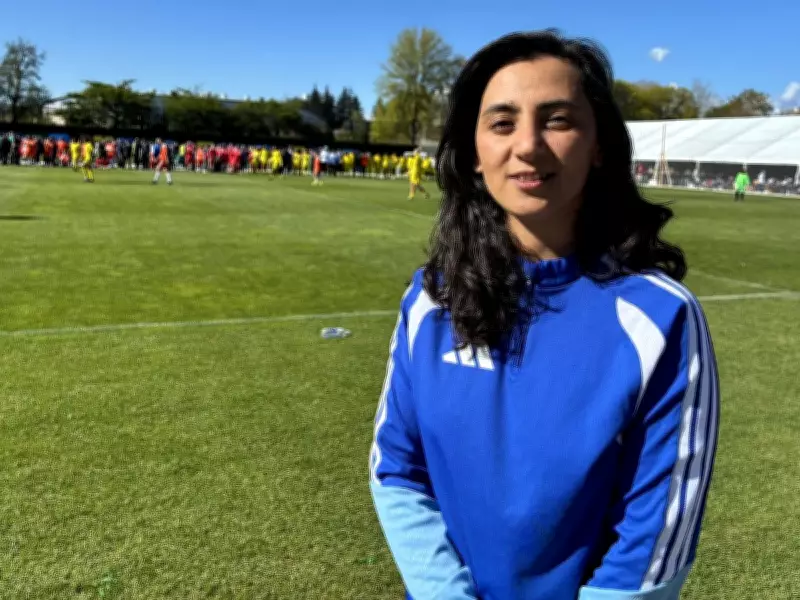
Khalida Popal's smile shone brighter than the sun this week after FIFA officials meeting in Vancouver changed their rules to allow female soccer players from Afghanistan to return to international competition.
"It's a historical moment for the women of Afghanistan, for the women around the world. It's a victory," a beaming Popal, the former Afghanistan women's national team captain, told Postmedia while at the University of B.C. for a FIFA event.
It is a moment Popal and other former players from her home country have been fighting for since Afghan women were stripped of most human rights when the authoritarian Taliban regime resumed power in 2021.

To regain the right to play soccer at the highest level of competition is about more than sports, she argued.
"Football for us has always been a great platform, a platform to stand and use our voices for our sisters who are erased from the society," Popal said.
On Tuesday, FIFA President Gianni Infantino and other officials met with representatives of Afghan women's football, including Popal, as part of the FIFA Congress in Vancouver. The congress is happening this week in advance of Vancouver being one of the host cities of the 2026 World Cup in June and July.
The rule change allows Afghan female players to once again represent their country in international competitions. The change was made under "exceptional circumstances" when a member country, in this case Afghanistan, is "unable" to support the team, says a FIFA news release.
"The ultimate aim is to ensure that players are not excluded from international football due to situations beyond their control," it adds.
A 2025 United Nations report said Taliban policies had led to "the most severe women's rights crisis in the world," with harsh restrictions on education and employment, and an erosion of safety and independence.
The Afghan team competing in future international competitions will be comprised of diaspora women who have been able to flee the country, and their training and games will be held in other nations. Popal is heartbroken that women in Afghanistan will not be able to play, but vows to use this opportunity to continue to raise awareness about their dangerous plight.
"We will continue advocating for them," she said. "We will be their voice."
Popal was a key founder of the first Afghanistan women's national team in 2007, but that ended with the return of the Taliban, which Canada deems a terrorist organization.
"Our players lost their right to represent Afghanistan as a national team or play any sport, because there is a ban on education and sport for women," Popal said. "They've taken the right from women from active participation in society."