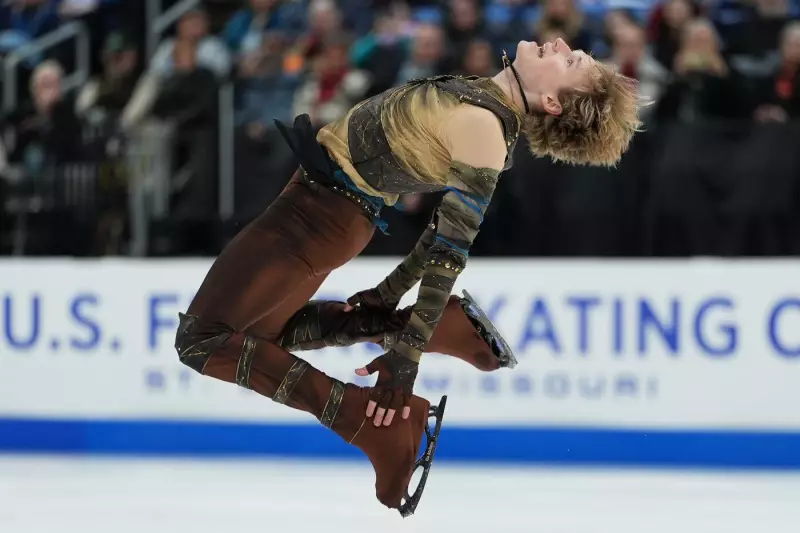
The world of figure skating is grappling with a profound question following a season of breathtaking athleticism: has the sport physically reached the limits of what the human body can achieve? This debate has intensified in the wake of performances by skaters like American champion Ilia Malinin, who continue to redefine the possible.
The Pinnacle of Technical Difficulty
The discussion centers on the unprecedented technical content now standard at elite competitions. Skaters are routinely landing jumps with four rotations, a feat once considered the outer limit. Ilia Malinin, competing at the U.S. Figure Skating Championships in St. Louis on January 8, 2026, exemplifies this push. His performances, captured by Associated Press photographer Stephanie Scarbrough, showcase a blend of power and precision that seems to test the very laws of physics.
Sports scientists and veteran coaches are now openly wondering if the current generation of skaters is approaching a biological plateau. The physical demands of executing quadruple jumps, while maintaining the artistry and stamina for a full program, may represent a natural ceiling. The risk of severe injury from the immense gravitational forces and repetitive impact adds weight to the argument that there is a finite boundary to human advancement in the discipline.

Beyond the Quad: The Search for New Frontiers
If the quadruple jump represents the current summit, the sport faces a strategic crossroads. The conversation is shifting to what comes next. Some insiders suggest the future lies not in a fifth rotation—a jump many biomechanics experts deem physiologically impossible—but in unprecedented combinations, enhanced artistic expression, and even more complex transitions between elements.
The focus may return to the foundational pillars of skating: edge quality, speed, and musical interpretation. The integration of technology in training, from advanced motion capture to AI-assisted jump analysis, could help skaters optimize their existing techniques to eke out minuscule gains. However, these are refinements, not the revolutionary leaps seen in previous decades.
Implications for the Future of the Sport
This potential performance plateau carries significant implications. For athletes, it could mean a longer competitive lifespan, as the next wave of teenagers may not possess a decisive technical advantage over seasoned veterans. For judges and the governing body, it necessitates a scoring system that continues to reward innovation and comprehensive excellence when raw jump difficulty can no longer be the sole differentiator.
For fans, the era of chasing ever-higher technical scores might evolve into an appreciation for mastery and consistency. The question of limits also sparks a philosophical debate about the purpose of elite sport: is it solely about pushing boundaries, or is it about achieving perfection within the boundaries we have?
As the figure skating world looks ahead to the next Olympic cycle, the performances of athletes like Ilia Malinin will be scrutinized not just for their medal potential, but as indicators of whether the sport is on the cusp of a new, more nuanced era or if another unexpected leap still awaits.