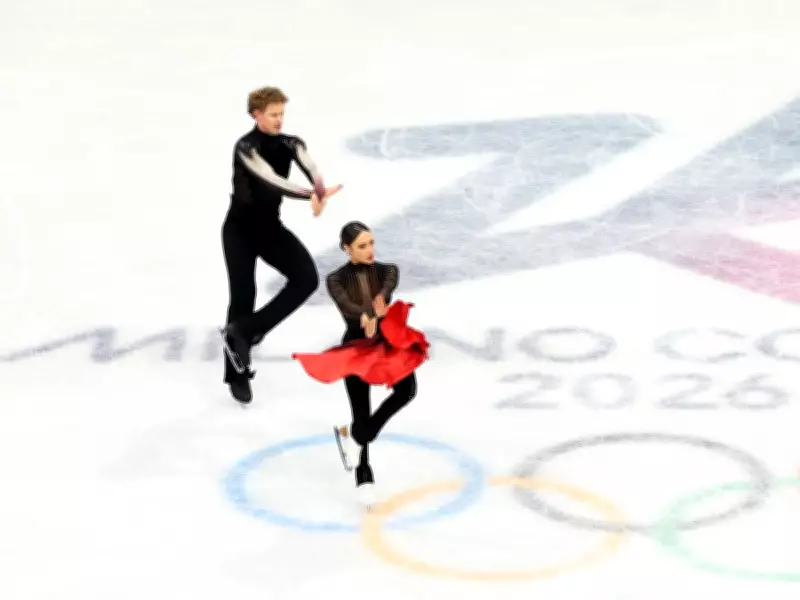
Ice Dancing Controversy Ignites Fan Outcry Over Olympic Judging
The conclusion of the ice dancing competition at the 2026 Winter Olympics in Milan has sparked significant controversy, with fans launching a petition demanding an official investigation into the judging process. The International Skating Union (ISU) has firmly stated that no such review will be conducted, despite growing public pressure.
Petition Gains Momentum as Fans Question Fairness
A Change.org petition calling on the ISU to "uphold the spirit of fair play and competition" has rapidly accumulated over 15,000 signatures as of Friday morning. The petition specifically references the narrow margin between gold and silver medalists in the ice dancing finals, where American skaters Madison Chock and Evan Bates finished just 1.43 points behind French champions Laurence Fournier Beaudry and Guillaume Cizeron.
The petition creator drew direct parallels to the infamous 2002 figure skating scandal involving French judge Marie-Reine Le Gougne, whose scores were ultimately discarded following allegations of vote-fixing. "As a passionate fan who cherishes the integrity of figure skating, I find it deeply troubling to witness similar controversies re-emerging in our beloved sport," the petitioner stated.

Judging Discrepancies Raise Eyebrows
The scoring breakdown reveals significant variations among the nine-judge panel. Only five judges scored the French pair higher than the Americans, with particularly notable discrepancies coming from specific judges. Czech judge Richard Kosina awarded the French team 138.49 points compared to Chock and Bates' 135.23, while Spanish judge Marta Olozagaree gave Beaudry and Cizeron 137.03 points versus the Americans' 132.75.
The most controversial scoring came from French judge Jezabel Dabouis, who was the only judge to award Chock and Bates fewer than 130 points. Dabouis gave the French pair 137.45 points and the Americans just 129.74—a substantial 7.71-point difference that significantly impacted the final standings.
Conversely, American judge Janis Engel provided the highest score for Chock and Bates, awarding them 137.67 points compared to the French team's 133.57. None of the judges who placed the American pair first gave them more than a 4.1-point advantage over their French competitors.
ISU Stands Firm Against Investigation
The ISU released an official statement via NBC on Thursday, clearly stating: "There are no plans for an investigation. It is normal for there to be a range of scores given by different judges in any panel and a number of mechanisms are used to mitigate these variations. The ISU has full confidence in the scores given and remains completely committed to fairness."
Skater Reactions and Calls for Transparency
Three-time world champions Madison Chock and Evan Bates expressed both pride in their performance and frustration with the judging system. "We felt like we delivered our absolute best performance that we could have. It was our Olympic moment. It felt like a winning skate to us, and that's what we're going to hold on to," Bates told reporters on Thursday.
Chock specifically addressed the need for greater transparency in figure skating judging during an interview with CBS News. "I think it would definitely be helpful if it's more understandable to the viewers, to see more transparent judging, and to understand what's going on," she said. "It's also important for the skaters, that the judges be vetted and reviewed, to make sure that they are also putting out their best performance."
The controversy highlights ongoing concerns about subjectivity in figure skating scoring, particularly in disciplines like ice dancing where artistic interpretation plays a significant role alongside technical execution. With the French pair entering the free dance with a slim 0.46-point lead, every scoring decision carried amplified significance in determining the Olympic champions.