Team Canada's Olympic Goaltending Situation Under Scrutiny Ahead of Milano Cortina Games
As the Milano Cortina Olympics approach, Team Canada's hockey rosters present a fascinating paradox. While the men's team boasts an offensive powerhouse that makes them gold medal favorites, significant questions linger about their goaltending stability. Meanwhile, the women's team, traditionally dominant in Olympic competition, finds itself in an unusual underdog position after being thoroughly outplayed by the United States in recent exhibition matches.
Men's Team: Offensive Brilliance Meets Goaltending Uncertainty
The Canadian men's roster reads like a who's who of NHL superstars. Connor McDavid, Nathan MacKinnon, and Macklin Celebrini currently occupy the top spots in NHL scoring, while ageless wonder Sidney Crosby seeks his third Olympic gold medal alongside veteran defenseman Drew Doughty. The lineup further strengthens with two-time Norris Trophy winner Cale Makar, Mitch Marner, and Montreal's own Nick Suzuki, who is building a strong case for the Selke Trophy this season.
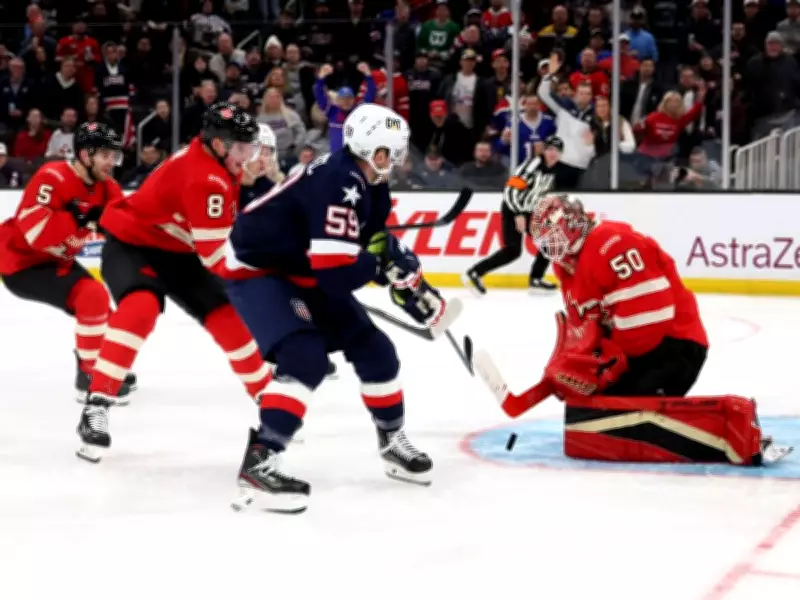
Despite this embarrassment of offensive riches, a single position threatens to undermine Canada's golden aspirations: goaltending. All three selected netminders—Logan Thompson, Darcy Kuemper, and Jordan Binnington—have experienced challenging seasons statistically, with each posting more losses than victories.

Logan Thompson shows the most promising numbers but faces health concerns after recently returning from injured reserve. Darcy Kuemper, the 2022 Stanley Cup champion with Colorado, is having a serviceable but unspectacular season. Most concerning is Jordan Binnington's performance, with only eight wins in thirty-two appearances and a goals-against average ranking 58th in the NHL. His selection appears based primarily on his strong performance in last year's 4 Nations Face-Off tournament rather than current form.
Historical Precedent: The Carey Price Standard
The importance of elite goaltending in Olympic competition cannot be overstated. Canada's 2014 gold medal victory in Sochi—the last Olympics featuring NHL participation—provides a perfect case study. While that team also featured an offensive juggernaut, it was Carey Price's legendary performance that secured the championship.
Price posted remarkable statistics: five wins in five starts, a 0.59 goals-against average, a .972 save percentage, and two shutouts. More importantly, three of those victories came in tense one-goal games, including an overtime thriller against Finland and a nail-biting 2-1 victory over Latvia where Shea Weber's third-period winner saved the day.
The Latvian game particularly highlighted how even an underdog team with hot goaltending can challenge favorites. Kristers Gudlevskis, then a 21-year-old Tampa Bay prospect, made an astonishing 55 saves against Canada's offensive onslaught, demonstrating how a single outstanding goaltending performance can neutralize even the most talented lineup.
Women's Team: Unfamiliar Territory as Underdogs
On the women's side, Canada faces a different challenge. As defending Olympic champions with five gold medals in seven Olympic appearances since 1998, they typically enter tournaments as favorites. However, recent results have flipped this script dramatically.
The United States completed a convincing sweep of the four-game Rivalry Series, outscoring Canada by a substantial 17-goal margin. This dominance has established the Americans as clear favorites heading into Milano Cortina.
The emergence of the Professional Women's Hockey League (PWHL) has created both opportunities and challenges for Team Canada. While the league has undoubtedly elevated the global women's game, it has eliminated Canada's traditional preparation advantage. Previously, Canadian players would assemble for extended residencies, arriving at Olympics as cohesive units. The PWHL's demanding schedule no longer permits this luxury, potentially leveling the international playing field.

Furthermore, the PWHL's success has distributed talent more widely across nations. Czechia now boasts eight PWHL players—third most behind Canada and the United States—including league scoring leader Kristyna Kaltounkova, making them a potential dark horse capable of challenging the traditional North American powers.
Coaching Decisions and Tournament Implications
Men's head coach Jon Cooper faces difficult decisions regarding his goaltending rotation. With no clear standout performer this season, his choice of starting netminder could prove tournament-defining. Equally important will be managing the psychological aspect for goaltenders who have struggled at times during the NHL season.
The women's coaching staff must address the confidence gap exposed during the Rivalry Series while maximizing limited preparation time. Integrating PWHL standouts into effective international systems presents both tactical and logistical challenges that could determine medal outcomes.
As both Canadian teams prepare for Milano Cortina, their paths to gold medals face distinct obstacles. The men must overcome goaltending inconsistencies that threaten to undermine their offensive superiority, while the women must rediscover their championship form against a U.S. team that has recently dominated their rivalry. How these challenges are addressed will write the next chapter in Canada's storied Olympic hockey history.