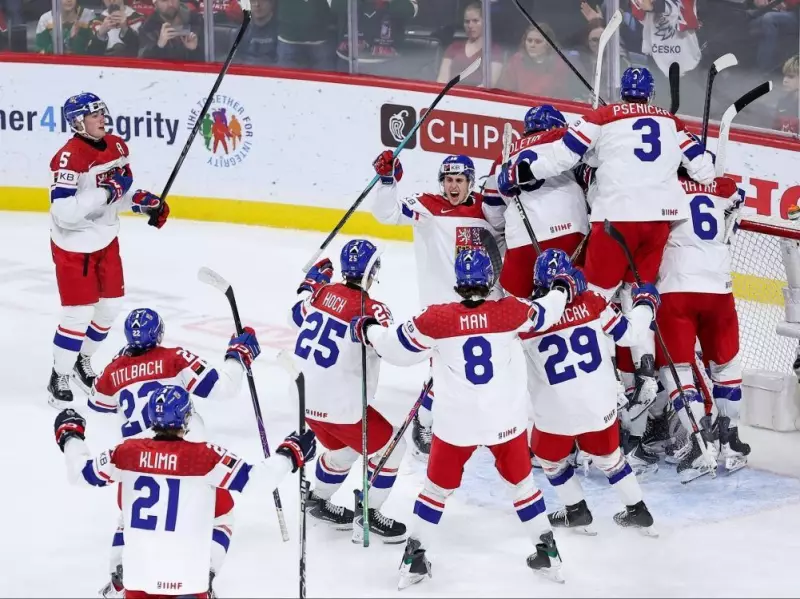
For the third year in a row, Canada's quest for gold at the IIHF World Junior Hockey Championship has been halted by Czechia. The 2026 semifinal loss in St. Paul, Minnesota, on January 4th marks a pivotal moment, forcing a reckoning for a hockey nation accustomed to automatic contention at the tournament's highest level.
Hockey Canada's Response: Investment Meets Unchanged Results
In the aftermath of the defeat, Hockey Canada's leadership pointed to significant organizational changes implemented over the past year. Katherine Henderson, president and CEO of Hockey Canada, addressed the recurring disappointment, referencing the similar loss to Czechia in the 2025 tournament in Ottawa.
The national body has invested heavily in its Program of Excellence, establishing its first full-time management team. Alan Millar was hired as the full-time general manager, with Misha Donskov joining as vice-president of hockey operations and James Emery moving to director of performance analysis.

"There has been a tremendous amount of resources invested in the Program of Excellence over these last 12 months, and we are confident that this will result in sustained success," Henderson stated. Yet, for the under-20 team, that success remains elusive. A potential loss to Finland in the bronze medal game would tie Canada's longest medal drought at the event, matching the stretch from 1979 to 1981.
On-Ice Shortcomings: Talent Alone Isn't Enough
Despite boasting a roster with 17 first-round NHL draft picks and three players on loan from NHL clubs, Canada's star power failed to deliver when it mattered most. While Calgary Flames prospect Zayne Parekh shone with 10 points in five games, other top talents like Michael Misa and Harrison Brunicke had quiet tournaments.
Head coach Dale Hunter's strategy leaned heavily on rolling four lines, but this over-reliance on depth became a liability. The injury to forward Brady Martin in the semifinal disrupted chemistry, and a supposed top line of Tij Iginla, Misa, and Porter Martone never consistently dominated. The team's structure faltered against a Czech squad that excelled in five-on-five detail and collective determination.
Czechia's head coach, Patrik Augusta, summarized the difference post-game: his players "showed that they are a team." Their roster, lacking a single superstar forward, won through depth and cohesion. Key contributors included Vojtech Cihar (LA Kings), Petr Sikora (Washington Capitals), and a stout defensive corps led by first-rounders Radim Mrtka and Adam Jiricek.
A New Reality: The World Has Caught Up
Canada's struggles were evident throughout the tournament, not just in the semifinal. A chaotic 7-5 win over Czechia on Boxing Day and a narrow 2-1 overtime victory against Latvia exposed vulnerabilities. These results are no longer anomalies; they are indicators of a shifted landscape.
The age of automatic supremacy for Canada at the world juniors is conclusively over. Nations like Czechia and Latvia have systematically closed the gap, developing programs that emphasize structure, teamwork, and resilience to counter Canada's traditional advantages of high-end skill and NHL pedigree.
While Hockey Canada's structural reforms aim for long-term improvement, the immediate lesson from St. Paul is clear. In today's international junior hockey, assembling a roster of high draft picks is no longer a guarantee of victory. The rest of the world has not only caught up but has also crafted a blueprint for beating the once-dominant Canadians.