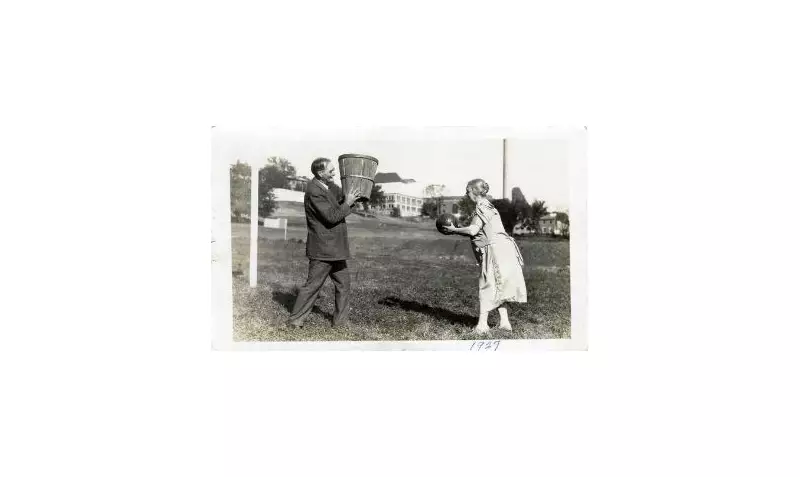
In the depths of a harsh Massachusetts winter in 1891, a Canadian physician and educator faced a classroom of restless, frostbitten students. His ingenious solution to curb their disruptive energy would not only solve an immediate disciplinary problem but would also give birth to one of the world's most popular sports: basketball.
From Almonte to Springfield: The Making of an Inventor
Dr. James Naismith was born on November 6, 1861, in Almonte, Ontario. Orphaned young after his farming parents succumbed to typhoid fever, Naismith was raised by a stern uncle who instilled values of self-reliance and hard work. He channeled this drive into excellence at McGill University in Montreal, where he shone as a philosophy student and a standout athlete in football and gymnastics.
Deeply religious and trained as a theologian and physician, Naismith held a progressive belief in the power of physical fitness for character development. He viewed sports not merely as competition, but as a vital tool for building cooperation, judgment, and self-control. This philosophy would directly inspire his most famous creation.

The "Incurable" Class and the Birth of Hoops
By the winter of 1891, Naismith was teaching physical education at the International YMCA Training School in Springfield, Massachusetts. Tasked with managing an indoor class during foul weather, he found his students—whom he later called "incorrigibles"—bored and unruly with traditional calisthenics. He needed a new, engaging team game that could be played safely indoors.
Drawing inspiration from a childhood game called "duck on the rock," Naismith blended elements from soccer, football, and field hockey. His goal was a sport of "accuracy, judgment, individual skill, initiative, self-control and the spirit of co-operation." He nailed two peach baskets to the lower rail of a gymnasium balcony, devised a set of 13 foundational rules, and used a soccer ball. The first game, featuring nine players per side, was played on December 21, 1891, and ended with a single score: 1-0.
The effect was immediate. As Naismith later recalled, "It was the start of the first basketball game — and the finish of trouble with that class." His invention successfully tamed the winter hooliganism he faced.
Rejecting Fame for the Game
Despite the instant success of his invention, James Naismith remained remarkably modest. Colleagues suggested naming the new sport "Naismith-ball" in his honour, but the Canadian educator firmly rejected the idea. He preferred the simple, descriptive name derived from his equipment: basketball.
Naismith, who shied away from the glory of competitive athletics, never sought to profit from his game. His primary focus remained on its educational and recreational benefits. From those humble beginnings with peach baskets, basketball has grown into a global phenomenon played by an estimated over 400 million people worldwide.
The legacy of Dr. James Naismith extends far beyond the court. He exemplified how sport could be a force for good, building character and community. From a Canadian farm boy to the inventor of a worldwide pastime, his story is a testament to innovation born from necessity, humility, and a deep commitment to shaping better individuals through play.