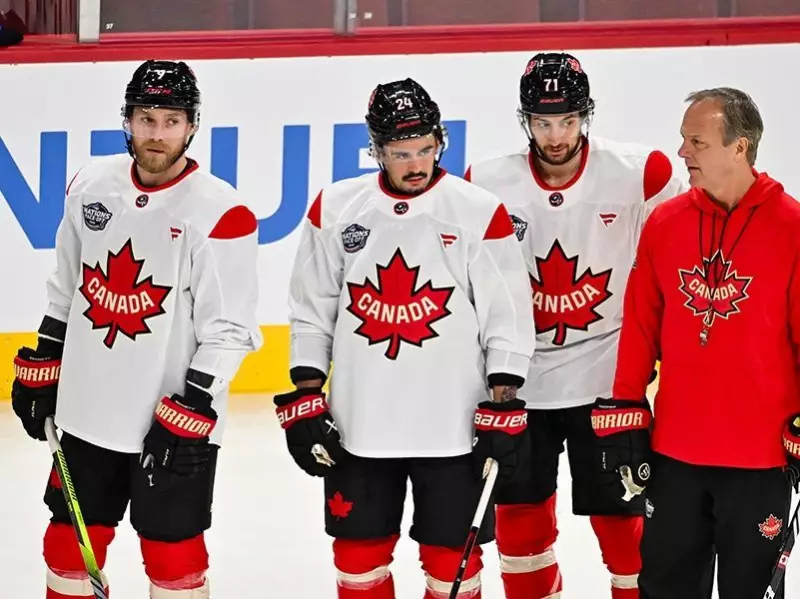
The pressure on head coach Jon Cooper to deliver gold for Canada at the 2026 Winter Olympics in Milan just intensified with a single, controversial roster decision.
The Surprising Omission
When Hockey Canada unveiled its 25-man Olympic roster on Wednesday, a glaring omission stole the spotlight. Sam Bennett, the Conn Smythe Trophy-winning forward from the back-to-back Stanley Cup champion Florida Panthers, was left off the team. In his place, Anthony Cirelli, a player coached by Jon Cooper with the Tampa Bay Lightning, was selected.
This decision has immediately shifted focus onto Cooper and the selection committee, led by GM Doug Armstrong and his assistant Julien BriseBois. The choice appears to hinge on coaching comfort, as no members of the Florida Panthers' staff are involved with this iteration of Team Canada.

Building a Team, Not a Collection of Stars
Armstrong has emphasized the philosophy of constructing "the best team, not the best collection of players." The roster is anchored by explosive talents like Connor McDavid and Nathan MacKinnon, supported by captain Sidney Crosby and phenom Macklin Celebrini.
The depth of Canadian talent is staggering. The selection committee left off not only Bennett, but also high-scoring players like Mark Scheifele, Wyatt Johnston, and Connor Bedard, each with over 45 points in less than half an NHL season. Bennett himself has 20 points in his last 17 games after a slow start and has scored 27 playoff goals over the past three seasons.
Learning from the 4 Nations Face-Off
Cooper's experience coaching Canada at the 4 Nations Face-Off tournament in February 2025 directly influenced the roster build. Every game was tightly contested: an overtime win against the United States in the final, an overtime victory over Sweden, and a narrow win against Finland, who pulled their goalie late.
"International hockey has changed," Cooper stated before the roster announcement. "It used to be Canada would start the Olympics on third base... Now, there are like six countries starting on third base." This reality informed the pursuit of players who excel in close, defensive games.
Defensive Decisions and Goaltending Concerns
The eight defencemen from the 4 Nations tournament were all retained for Milan. Some selections raised eyebrows, with Thomas Harley, Travis Sanheim, and Colton Parayko chosen over offensive talents like Jakob Chychrun and Evan Bouchard. Armstrong praised players like Parayko and Sanheim, saying playing against them is "like swimming in seaweed."
The most significant question mark remains in goal. Jordan Binnington, who backstopped Canada to the 4 Nations title, is having a difficult NHL season, ranking 40th in wins, 54th in goals-against average, and 58th in save percentage. Yet, he is the likely starter for Game 1 in Milan, with Logan Thompson or Darcy Kuemper as backup. This uncertainty places immense pressure on Team Canada to play a defensively airtight system.
The Cirelli vs. Bennett Calculus
The direct comparison between Cirelli and Bennett is at the heart of the debate. Both average around 18 minutes of ice time per game in the NHL this season. The critical stat for a tournament of tight games, according to the selection logic, might be defensive responsibility: Cirelli has been on the ice for 20 goals against this season, while Bennett has been on for 31.
With gold-medal games often decided by a single goal, the committee opted for the player perceived as more defensively reliable—one who also happens to be coached by the man behind the bench. Whether this decision was based purely on hockey logic or influenced by familiarity will be a defining storyline for Canada's quest for Olympic gold in February 2026.