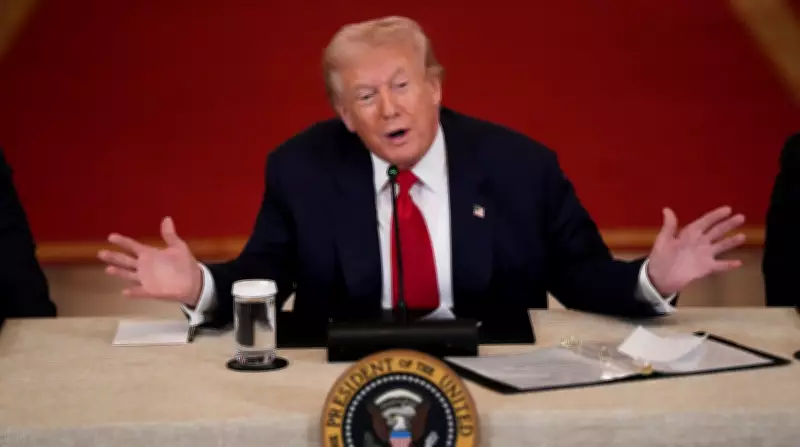
In a striking statement at the White House, President Donald Trump suggested that reforming college sports presents a greater challenge than managing the ongoing conflict with Iran. This remark came during a roundtable discussion focused on the future of collegiate athletics, where Trump convened with notable figures from the sports world.
Roundtable Highlights Tensions in College Athletics
The event, held in the East Room on Friday, March 6, 2026, brought together former Alabama football coach Nick Saban, SEC commissioner Greg Sankey, and Notre Dame athletic director Pete Bevacqua. Over an hour was dedicated to debating the impacts of high salaries for star athletes and recent changes like the transfer portal, which participants argued are damaging college sports.
Timing Raises Eyebrows Amid Global Crises
With the U.S. and Israel having launched strikes on Iran just a week prior, the lengthy focus on college sports was particularly notable. When a reporter attempted to shift the conversation to Iran, Trump interrupted, stating, "That's an easy problem compared to what we're doing here." He later expressed frustration when asked about his decision to fire Homeland Security Secretary Kristi Noem, urging the discussion to remain on topic.

Reflecting on his priorities, Trump acknowledged the perceived insignificance of college sports compared to international conflicts but emphasized its personal importance. "I saw what was happening with college sports. And it doesn't sound very important compared to what's happening in Iran and other places," he said. "But it is very important to me. And if I can get it done, I'll get it done."
Concerns Over Athlete Compensation and NCAA Reforms
Trump has long criticized the NCAA's name, image, and likeness era, arguing that escalating athlete salaries are negatively transforming college athletics. He contends that lucrative sports like football are overshadowing smaller and women's programs, potentially driving universities toward financial instability.
The roundtable included prominent political figures such as House Speaker Mike Johnson, Florida Gov. Ron DeSantis, and Secretary of State Marco Rubio, all of whom shared their passion for college football and concerns for its sustainability. Notably, no current college athletes were present, though former Secretary of State Condoleezza Rice, who once served on the College Football Playoff Selection Committee, attended.
Push for Legislative and Executive Action
Trump urged Congress to pass the SCORE Act, legislation aimed at imposing new regulations on college sports, though it faces criticism as favoring the NCAA and powerful institutions. When informed of its unlikely passage, Trump vowed to draft an executive order on the matter, warning, "If this doesn't work, colleges are going to be destroyed."
He also nostalgically advocated for a return to a simpler scholarships model, suggesting minimal compensation for athletes. This stance contrasts with an executive order he signed in July, which mandated federal clarification on whether college athletes should be considered employees.
Broader Context and Implications
The discussion followed private meetings where Trump likely addressed Iran and other critical issues, including agreements with defense contractors to boost weapons production. Despite the global backdrop, the president's extensive engagement with college sports reform underscores its significance in his agenda.
As Trump and his advisors continue to navigate complex domestic and international challenges, the debate over college athletics remains a focal point, highlighting the intersection of sports, policy, and economic concerns in American society.