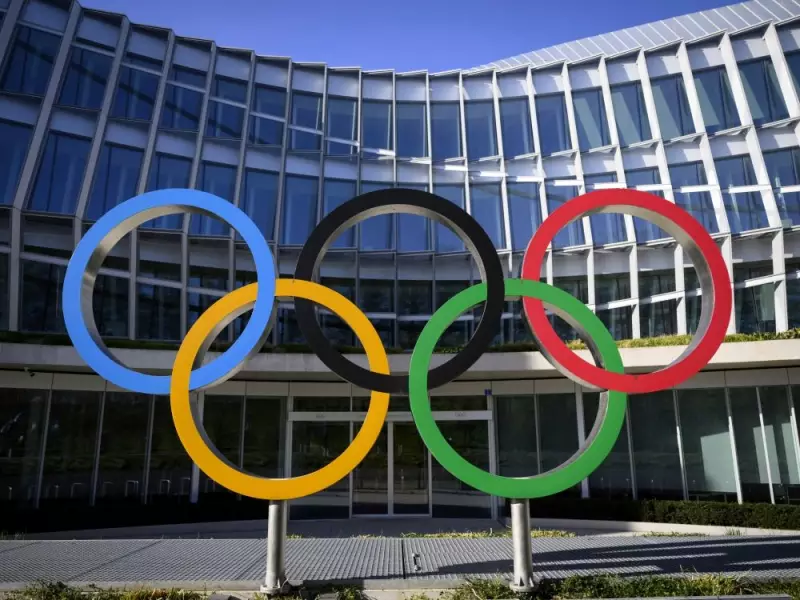
The International Olympic Committee is taking significant steps toward addressing one of the most contentious issues in modern sports: the participation of biological males in female athletic competitions. Under new leadership, the organization has initiated a formal process that could reshape the future of women's sports at the Olympic level.
New Leadership, New Direction
The IOC recently elected its first female president, Kirsty Coventry from Zimbabwe, a decorated swimmer with seven Olympic medals to her name. Shortly after assuming her new role, Coventry announced the creation of a specialized working group titled "Protection of the Female Category." This move comes after controversial incidents during previous Olympic games where biological male boxers competed against and defeated female athletes, sparking international debate about fairness in women's sports.
Coventry explained the committee's position in a June media release, stating: "There was overwhelming support from all of the Members who were present here, and those who were able to share with us before they left, that we should protect the female category. With that, we are going to set up a working group made up of experts and International Federations."

The Unspoken Challenge
Despite the clear mission statement, the IOC leadership has been notably cautious about explicitly identifying what exactly threatens the female category. Coventry's 142-word statement carefully avoided specifying the primary concern that prompted the working group's formation. This diplomatic approach has drawn criticism from observers who argue that clarity is essential for addressing the core issue.
The underlying concern, as articulated by critics like author Amy Hamm, centers on biological males competing in women's sports. The debate has intensified following recent Olympic competitions where transgender athletes participated in women's categories, raising questions about competitive fairness and the preservation of opportunities for biological female athletes.
Scientific Review and Global Implications
Earlier this month, the IOC reportedly received a comprehensive scientific review on male physical advantage in sports from Canadian physician Dr. Jane Thornton. This document is expected to play a crucial role in shaping the committee's final decision on transgender athlete eligibility criteria.
The IOC announced in June that it would assume responsibility for establishing transgender athlete eligibility standards, taking over from various national and international sporting federations that currently maintain different policies. This centralized approach aims to create consistency across Olympic sports while balancing the competing values of inclusion and competitive fairness.
Media outlets worldwide have speculated that the IOC may be preparing to implement restrictions on transgender women's participation in female sports categories. The working group's recommendations could establish new precedents that influence sports organizations at all levels, from local competitions to international championships.
The Balance Between Inclusion and Fairness
The ongoing discussion has frequently framed the issue as a conflict between inclusion and fairness. However, critics of current policies argue that this framing misunderstands the fundamental purpose of sex-segregated sports. They contend that protecting the female category from biological male competitors doesn't constitute exclusion but rather ensures fair competition within appropriate biological parameters.
As the IOC working group begins its deliberations, the sports world watches closely. The outcome of these discussions could determine the future landscape of women's sports at the Olympic level and beyond. The committee faces the challenging task of establishing policies that respect both transgender athletes' rights and the competitive integrity of women's sports.
The international sporting community awaits the working group's findings with the understanding that whatever standards emerge will likely face both praise and criticism from various stakeholders in this deeply polarized debate.