Tragedy on Quebec Ski Hill Raises Critical Questions About Chairlift Safety and Emergency Plans
A devastating incident at a Quebec ski resort has ignited a pressing debate about chairlift safety protocols and emergency preparedness, just as thousands of skiers prepare for spring break. On February 11, 2026, a 13-year-old girl tragically lost her life after her hood became entangled in a chairlift at Centre Vorlage in Wakefield, Quebec.
Details of the Fatal Incident
According to police reports, the young girl was attempting to disembark from the lift when her hood got caught in the chair mechanism. She was dragged beyond the designated off-ramp area, leaving her suspended and out of reach of resort staff. The precise sequence of events—including how and when the lift was stopped—remains unclear as investigations continue.
Centre Vorlage owner Alex Gaboury described the circumstances as "a series of improbable circumstances and ... some are inexplicable" in an interview with local newspaper The Low Down. Gaboury, who was reportedly the first employee on the scene, stated that staff made the difficult decision to restart the lift to bring the girl back down the hill for medical attention.

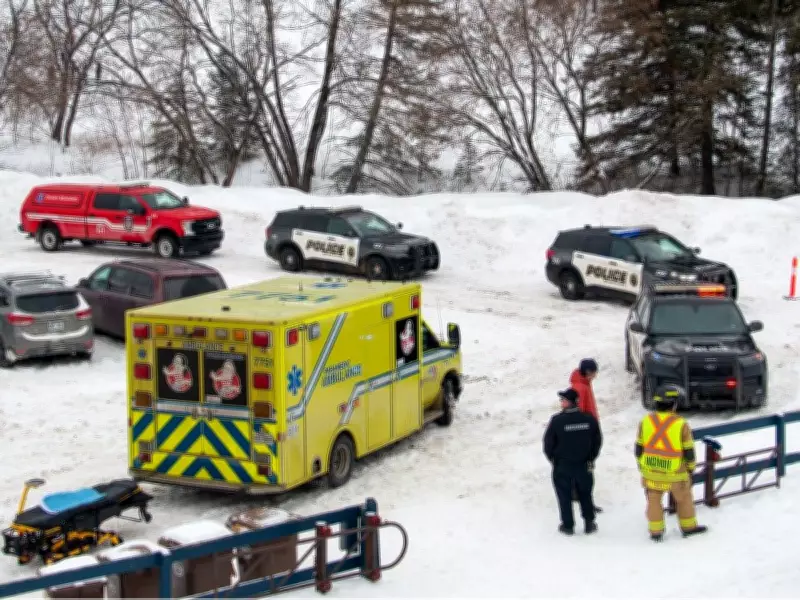
Emergency responders arrived at the scene shortly after 2 p.m. on February 11. The girl was revived at Wakefield Hospital before being transferred to the Children's Hospital of Eastern Ontario, where she succumbed to her injuries four days later.
Immediate Regulatory Response and Investigations
Following the incident, the Régie du bâtiment du Québec (RBQ)—the provincial body responsible for enforcing safety regulations—ordered temporary shutdowns of lifts at Centre Vorlage. Inspections conducted on February 12 and 13 revealed unspecified "non-conformities" with safety standards.
The resort was permitted to reopen on February 16 after demonstrating that the identified issues had been corrected. According to the Ottawa Citizen, Centre Vorlage implemented additional staff training and increased its ski patroller presence following the reopening.
Both local Quebec police and the Ontario coroner's office are conducting separate investigations into the circumstances surrounding the tragedy. The Association des stations de ski du Québec expressed shock at the death, with president and CEO Yves Juneau emphasizing that safety remains their top priority.
"One accident is one too many for us," Juneau stated, adding that any recommendations from authorities would be implemented across provincial ski resorts.
Broader Safety Concerns and Industry Standards
The incident has highlighted broader concerns about chairlift safety mechanisms and emergency evacuation protocols. Canadian ski lifts are governed by the CSA Z98 national safety standard, which regulates design, construction, operation, inspection, and maintenance requirements.
Tom Sabela, a retired millwright with 25 years of experience as a ski patroller and lift maintenance specialist, noted that chairlifts are typically designed with safety mechanisms that trigger automatic stops when falls occur at disembarkation points—areas he described as particularly accident-prone.
"That's where accidents always, always, always happen," Sabela explained. "They're sort of part of what goes on, people have a tough time getting off the lift."
However, Sabela emphasized that contingency plans must account for mechanical malfunctions and the unique characteristics of individual lifts. "Many lifts have a downloading platform so that if someone were to go around like that, you could easily access them," he said. "Some lifts don't have that. It may end abruptly, and you're hanging right over the terrain. But that needs to be accounted for in the training."
Ski Patrol Training and Emergency Response Protocols
Across Canadian ski hills, accredited ski patrollers bear primary responsibility for emergency response and initial medical care until professional medical services arrive. Quebec's alpine skiing regulations mandate that resorts provide "minimum services that allow for the rescue of an injured person," but no specific patroller-to-guest ratios are established.

Sabela raised concerns about evacuation training practices, noting that in his experience, such training typically occurred at easier locations rather than challenging areas like the space between the bull wheel and first tower. The Canadian Ski Patrol, which trains volunteer patrollers across Canada, stated that their training in Quebec follows all applicable legislation and regulations.
Mark Brown, co-executive director of the Canadian Ski Patrol, explained that "the specific methodology, equipment and roles performed by our volunteers are determined by the area. The conduct of a lift evacuation is always performed under the direct supervision of area management."
Historical Context and Preventive Measures
This tragedy follows another fatal incident in 2023 when a six-year-old girl died after being dragged by a T-bar surface lift at Val-St-Côme ski resort—also by her hood. The coroner investigating that case, Julie-Kim Godin, focused her recommendations on improving emergency response rather than banning hooded clothing.
"Should we ban all hoods while practising a sport? I didn't want to go there," Godin said. "I felt it was more productive to act on prevention at the level of instructors and attendants so that we can ensure ... an emergency measures plan when an event occurs."
Godin emphasized that while skiing inherently involves risks, "what we can say is that once someone falls, we need a clear and effective plan."
Technological Solutions and Industry Challenges
Some Quebec ski resorts have begun testing European artificial intelligence systems designed to enhance chairlift safety. These include Bluecime, which alerts users and operators when safety bars haven't been lowered, and Mantis Ropeway, which automatically stops lifts when it detects falls or failed disembarkations.
Yves Juneau acknowledged that such AI systems could eventually become industry standards but noted financial challenges for smaller resorts. The Association des stations de ski du Québec has requested extended loan repayment terms from the provincial government to help operators upgrade equipment.
"It's just to facilitate access to financing because we are concerned about small ski hills being able to renew their equipment," Juneau explained.
Expert Recommendations for Skiers and Resorts
Tom Sabela, deeply affected by the recent tragedy, suggested that ski hills should be required to maintain patrol stations with full rescue equipment at both top and bottom lift locations to ensure faster emergency response times.
For skiers, Sabela offered practical advice: "Be vigilant when you're exiting the lift at the top. Get a good shot going straight ahead ... you have time before you get off the chair just to kind of look to the left and right, make sure that nothing's tangled in the chair. And ski with somebody more experienced."
The Association des stations de ski du Québec continues to promote its mountain safety guidelines, which include comprehensive instructions for safely using all types of ski lifts. As investigations proceed and the ski community mourns, this tragedy serves as a sobering reminder of the critical importance of rigorous safety protocols, comprehensive staff training, and effective emergency response planning at winter sports facilities across Quebec and beyond.